



What's Happening?
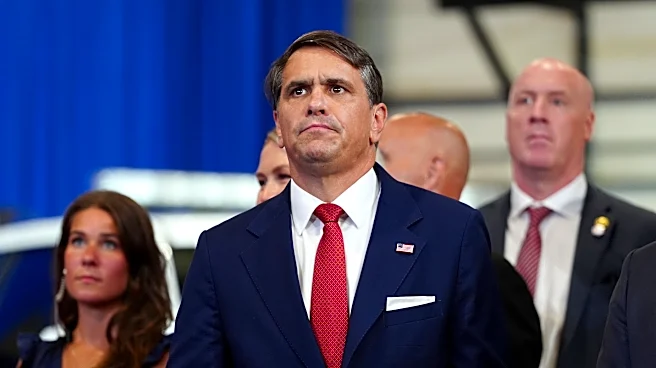
Representative Michael Baumgartner of Washington introduced H.R. 10109, known as the Wildfire Event Contract Prohibition Act, on August 17, 2026. This bill aims to prevent federally regulated prediction markets from offering bets related to wildfires.
The proposed legislation specifically bans registered prediction-market platforms from listing or clearing contracts tied to wildfire events. It also seeks to close loopholes by prohibiting bets linked to factors such as acreage burned, containment efforts, evacuations, or property damage resulting from wildfires. Baumgartner emphasized that the bill's purpose is to eliminate financial incentives associated with fire damage, particularly in regions like Eastern Washington that are vulnerable to wildfires. He stated that Congress should ensure federally regulated markets do not facilitate wagers on the devastation of American communities. The bill also intends to preserve state authority over gambling regulations and directs the Department of Justice, in collaboration with the Commodity Futures Trading Commission and land-management agencies, to review enforcement options and propose additional tools for prosecuting wildfire betting schemes. This initiative follows public reports, highlighted in an August 2026 letter from nine senators to the Commodity Futures Trading Commission, indicating that Polymarket facilitated over $1.2 million in bets related to the 2025 Palisades and Eaton fires.
Why It's Important?
This legislation is important because it addresses a novel and potentially harmful financial practice that could create perverse incentives around natural disasters. By prohibiting betting on wildfire outcomes, the bill aims to remove any financial motivation that could exacerbate or even instigate wildfires, which have devastating consequences for communities, the environment, and the economy. The focus on Eastern Washington underscores the regional impact of wildfires and the need for protective measures. Preventing such markets from operating under federal regulation ensures that the integrity of financial systems is not compromised by activities that could be seen as profiting from destruction. Furthermore, maintaining state authority over gambling rules is crucial for upholding the existing regulatory framework and preventing federal overreach in areas traditionally governed at the state level. The directive for the Department of Justice to review enforcement options signals a proactive approach to combating potential criminal activities related to wildfire betting, including arson, which Baumgartner specifically mentioned as a concern. This bill could set a precedent for how financial markets interact with environmental and public safety issues, potentially influencing future regulations on other types of disaster-related speculation.
What's Next?
The Wildfire Event Contract Prohibition Act (H.R. 10109) will now proceed through the legislative process in Congress. It will likely be assigned to relevant committees for review, debate, and potential amendments. Stakeholders, including prediction market operators, environmental groups, and state gambling authorities, may offer testimony or lobbying efforts to influence the bill's progression. The Department of Justice, in conjunction with the Commodity Futures Trading Commission and land-management agencies, will begin reviewing enforcement options and developing recommendations for prosecuting wildfire betting schemes, regardless of the bill's immediate passage, as the underlying concern about such activities remains. If passed, the bill would necessitate the establishment of clear guidelines and enforcement mechanisms to ensure compliance from federally regulated prediction markets. Its implementation would also require ongoing monitoring to prevent companies from circumventing the ban through indirect betting methods. The outcome of this legislative effort could also prompt discussions about the ethical boundaries of financial markets and their role in relation to public welfare and natural disasters.
Beyond the Headlines
The introduction of the Wildfire Event Contract Prohibition Act highlights a deeper ethical and societal concern regarding the commodification of natural disasters. Allowing financial markets to profit from events like wildfires raises questions about moral hazard, where individuals or entities might be incentivized, directly or indirectly, by the potential financial gains from a disaster. This could erode public trust in financial institutions and create a perception that suffering can be exploited for profit. The bill also touches upon the evolving landscape of gambling and prediction markets, which are increasingly leveraging complex data and events for financial speculation. As technology advances, the types of events that can be bet on expand, necessitating a re-evaluation of regulatory frameworks to prevent unforeseen negative consequences. Furthermore, the legislation underscores the growing awareness of the economic and social costs of wildfires, particularly in the Western United States. By addressing the financial dimension of these disasters, the bill contributes to a broader conversation about comprehensive strategies for wildfire prevention, management, and recovery, emphasizing that all efforts should be directed towards protection rather than potential exploitation.