


What's Happening?
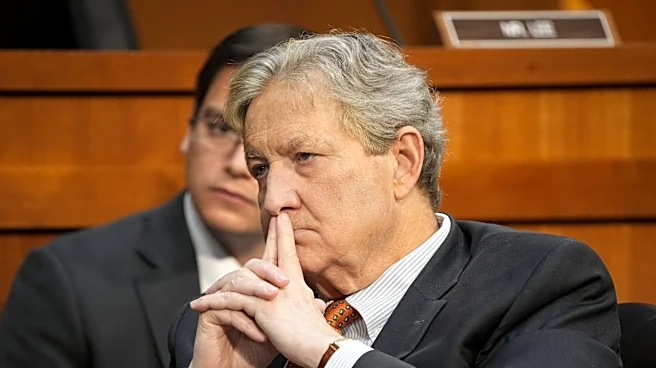
Actor Michael Kelly, known for his role as CIA Deputy Director of Operations Byron Westfield in 'Lioness,' publicly criticized Senator John Kennedy (R-LA) on social media platform Threads. Kelly's comments came in response to Senator Kennedy's actions
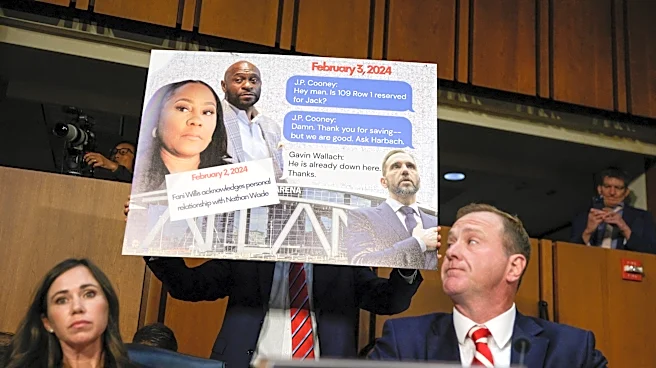
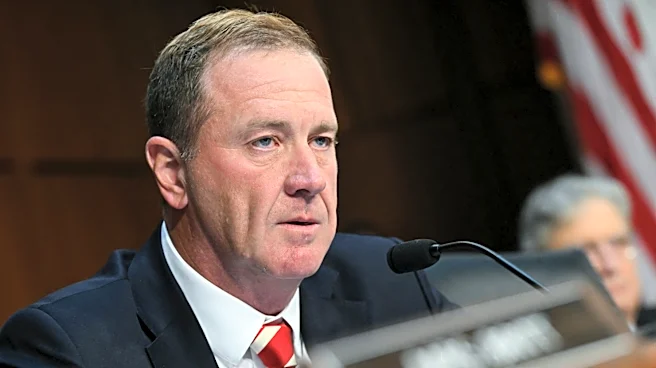
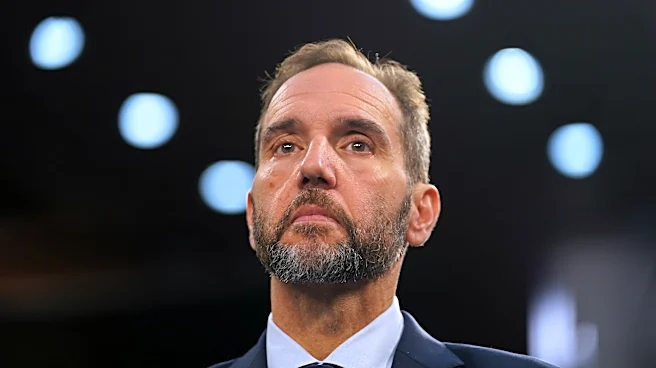
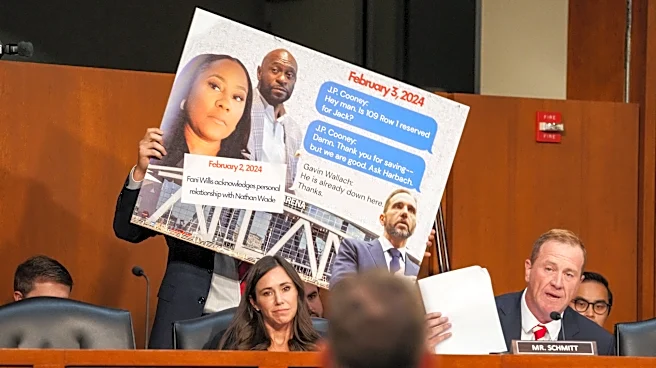
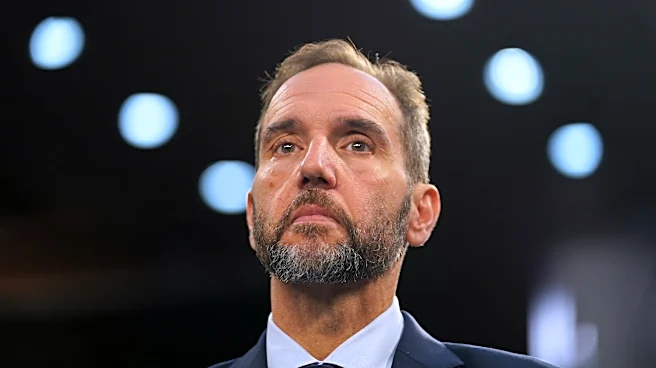
during a Senate Judiciary Committee hearing where Special Counsel Jack Smith testified. During the hearing, Senator Eric Schmitt (R-MO) attempted to use a poster board prop displaying text messages to imply that Jack Smith attended an Atlanta Hawks NBA game, linking it to a conspiracy theory. Senator Kennedy assisted Schmitt in displaying this prop. However, the accusation backfired when it was revealed that Schmitt and his staff had confused an Iowa Hawkeyes women's college basketball game, which Smith attended, with an Atlanta Hawks game. Kelly labeled Senator Kennedy as 'Sen Hee.Haw,' referencing the senator's folksy speaking style and implying his conduct was clownish.
Why It's Important?
This incident highlights the increasing intersection of celebrity commentary and political discourse, particularly through social media. Michael Kelly's public criticism of a sitting U.S. Senator, while not directly impacting policy, contributes to the broader public perception of political figures and the legislative process. The use of props and the subsequent factual error during a Senate Judiciary Committee hearing underscore concerns about the decorum and integrity of congressional proceedings. Such events can erode public trust in government institutions and the information presented by elected officials. The swift correction of the factual error by Special Counsel Smith and subsequent criticism from Democratic senators, including Senator Amy Klobuchar, emphasize the importance of factual accuracy in legislative oversight and public accountability.
What's Next?
While Michael Kelly's social media comment is unlikely to have direct legislative consequences, it adds to the ongoing public debate surrounding political conduct and accountability. The incident itself, involving the misrepresentation of facts during a Senate hearing, may prompt further discussions about the rules of engagement and the use of evidence in congressional proceedings. Democratic senators, such as Amy Klobuchar, have already demanded an apology from Senator Schmitt and criticized the 'reckless' line of questioning, suggesting that this issue may continue to be a point of contention. This event could also fuel further scrutiny of how information is presented and verified in high-stakes political environments, potentially influencing future committee hearings and public interactions with special counsels or other government officials.
Beyond the Headlines
This event delves into the broader implications of political theater and the weaponization of information in contemporary politics. The attempt to create a 'gotcha' moment with a factually incorrect prop reflects a strategy often employed to discredit opponents, regardless of accuracy. The rapid dissemination of such incidents through social media, amplified by public figures like Michael Kelly, demonstrates how quickly narratives can form and shift in the digital age. This raises questions about media literacy, critical thinking, and the public's ability to discern truth from misinformation. Furthermore, the incident highlights the challenges faced by institutions like the Senate Judiciary Committee in maintaining their credibility when partisan tactics overshadow substantive inquiry, potentially contributing to a decline in public confidence in governmental processes and the integrity of political debate.