
What's Happening?
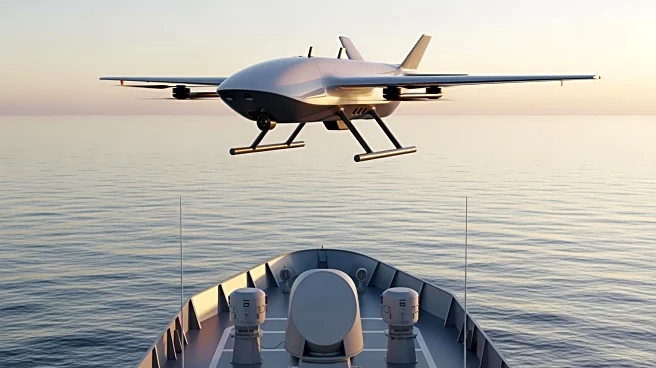
The European Maritime Safety Agency (EMSA) has awarded a €30 million contract to Airbus for the provision of Remotely Piloted Aircraft Systems (RPAS) services. This contract marks the first deployment
of Airbus's Flexrotor Uncrewed Aerial System in Europe, aimed at enhancing maritime surveillance capabilities. The Flexrotor system will support various missions, including emissions surveillance, search and rescue, and monitoring of illicit maritime activities. The drones will be deployed across EU member states, Norway, and Iceland, providing real-time data to national authorities. The contract allows for two parallel operations with the potential for additional deployments, enhancing the EU's maritime safety and environmental protection efforts.
Why It's Important?
This development represents a significant advancement in the EU's maritime surveillance capabilities, leveraging cutting-edge drone technology to enhance safety and security at sea. The use of drones for maritime operations can improve response times in emergencies, enhance environmental monitoring, and aid in the detection of illegal activities such as smuggling and unauthorized fishing. The contract with Airbus also underscores the EU's commitment to integrating advanced technologies into its safety and security frameworks, potentially setting a precedent for other regions to follow. This initiative could lead to increased collaboration among EU member states in maritime safety and environmental protection.
What's Next?
The deployment of the Flexrotor system is scheduled to begin in 2026, with the initial contract lasting two years and options for extension. As the system becomes operational, it is expected to provide valuable data that will inform future maritime safety policies and strategies. The success of this initiative could lead to further investments in drone technology for maritime applications, potentially expanding to other areas such as border security and disaster response. Stakeholders, including coast guards and environmental agencies, will likely monitor the system's performance closely to assess its impact on maritime operations.