







What's Happening?
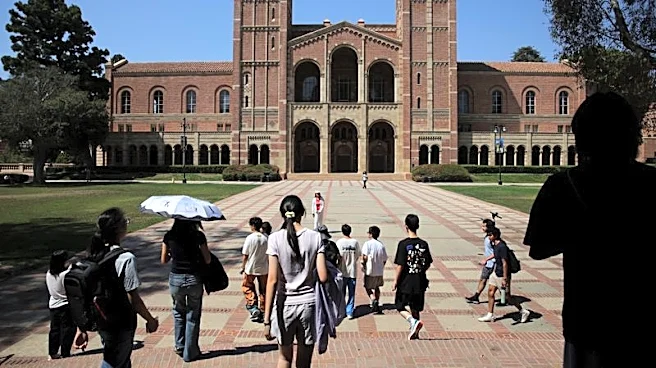
As new federal loan caps are set to take effect in July, confusion and uncertainty are growing among student loan borrowers. The changes, part of President Trump's overhaul of the student loan system, include new borrowing caps and repayment plans. These
adjustments are expected to push more borrowers towards private lenders. The Department of Education anticipates that these changes will lead colleges to lower tuition fees. However, the complexity of the new system and the ongoing debate about the value of a college degree, especially in the context of rapidly evolving job markets and AI advancements, are contributing to a sense of uncertainty among students and graduates.
Why It's Important?
The impending changes to the federal student loan system are crucial as they could significantly impact the financial futures of millions of students and graduates. The shift towards private lending may expose borrowers to higher interest rates and less favorable terms, increasing their financial burden. Additionally, the changes come at a time when confidence in the value of a college degree is waning, particularly among younger generations. The evolving job market, influenced by technological advancements, adds another layer of complexity to the decision-making process for prospective students. These factors combined could lead to a reevaluation of higher education's role in career preparation and economic mobility.
What's Next?
As the new loan caps are implemented, stakeholders will need to address the potential challenges and risks associated with increased reliance on private lending. Policymakers may need to consider additional measures to protect borrowers and ensure transparency in lending practices. Educational institutions might also face pressure to adapt their tuition and financial aid strategies to remain competitive and accessible. The broader implications of these changes on the higher education landscape and the economy will likely be a focus of ongoing discussion and analysis.