





What's Happening?
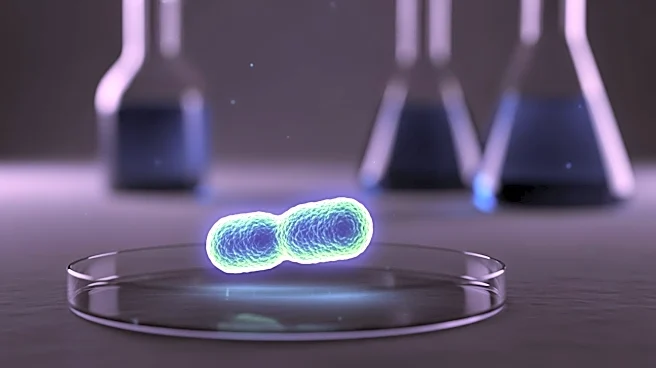
Researchers at the Japan Advanced Institute of Science and Technology, led by Prof. Eijiro Miyako, have identified a bacterium, Ewingella americana, with significant anticancer potential. This bacterium, isolated from the intestines of Japanese tree frogs,
has demonstrated the ability to completely eradicate tumors in mice with a single dose. The study, published in the journal Gut Microbes, highlights the bacterium's dual action of directly killing cancer cells and activating the immune system to attack tumors. The bacterium selectively accumulates in tumor tissues due to the low oxygen environment, immune suppression, and leaky blood vessels typical of tumors, allowing it to effectively target and destroy cancer cells.
Why It's Important?
This discovery is significant as it introduces a novel approach to cancer treatment, utilizing naturally occurring bacteria to target and eliminate tumors. The bacterium's ability to selectively target tumor cells while sparing healthy tissues presents a promising alternative to traditional cancer therapies, which often have significant side effects. The research underscores the potential of biodiversity as a source of new medical treatments and could lead to new options for patients with cancers that are resistant to current therapies. The study also opens avenues for further research into the use of bacteria in cancer treatment, potentially revolutionizing the field.
What's Next?
Future research will focus on expanding the application of E. americana to other types of cancer, such as breast and pancreatic cancer, and improving delivery methods to enhance safety and efficacy. Researchers are also interested in exploring combination therapies that integrate this bacterial treatment with existing immunotherapies and chemotherapies. These efforts aim to develop a comprehensive cancer treatment strategy that maximizes the therapeutic potential of E. americana while minimizing risks to patients.
Beyond the Headlines
The study highlights the untapped potential of using gut microbiota from amphibians and reptiles in medical research. This approach could lead to the discovery of other beneficial microorganisms with therapeutic properties. Additionally, the research emphasizes the importance of preserving biodiversity, as it may hold the key to future medical breakthroughs. The ethical implications of using live bacteria in treatment will also need to be considered, particularly regarding patient safety and the long-term effects of such therapies.