




What's Happening?
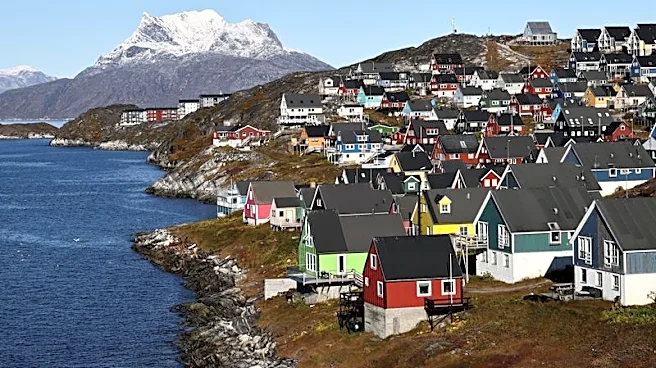
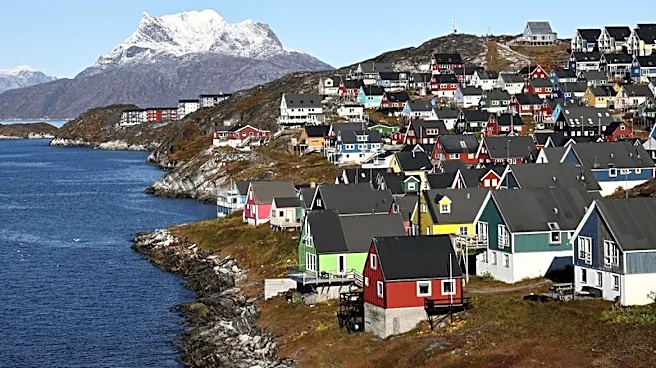
Greenland has inaugurated a new international airport in Ilulissat, a move designed to attract more global tourists and bolster the island's economy as it considers future independence from Denmark. The first international flight between Copenhagen, Denmark,
and Ilulissat took place on Thursday, October 29, 2026. Greenlandic Prime Minister Jens-Frederik Nielsen described the airport as one of the largest investments in the island's history, emphasizing its role in diversifying an economy heavily reliant on fishing. The new airport aims to improve accessibility to Ilulissat, known as the 'City of Icebergs' and a major tourist destination, which previously required travelers to use cruise ships, small planes from Iceland, or connect through Greenland's other international hubs. This development follows the opening of an international airport in Nuuk in late 2024.
Why It's Important?
The opening of the Ilulissat international airport holds significant strategic importance for Greenland, particularly in its aspirations for independence. A robust tourism industry, facilitated by improved infrastructure, can provide the economic foundation necessary for greater self-sufficiency. For the United States, this development in the Arctic region is noteworthy given President Trump's past interest in acquiring Greenland and the subsequent tensions with NATO allies. The U.S. has a vested interest in the stability and economic development of the Arctic, and a more economically independent Greenland could alter geopolitical dynamics in the region. Increased tourism could also lead to greater international presence and investment in Greenland, potentially influencing its strategic alignment and resource development. The airport symbolizes a step towards Greenland asserting more control over its destiny, both economically and politically.
What's Next?
The new airport is expected to significantly increase tourist arrivals to Ilulissat, enhancing Greenland's tourism offerings which include sled dog tours and icefjord cruises. This increased accessibility could lead to further development in the hospitality and service sectors. Greenlandic Prime Minister Nielsen explicitly linked the airport to the goal of independence, stating that a strong economic foundation is crucial. The U.S. and other international actors will likely continue to monitor Greenland's economic and political trajectory closely. The agreement signed by President Trump with Denmark and Greenland in September to strengthen Arctic and North Atlantic security indicates ongoing strategic interest in the region. The success of this tourism initiative will be a key indicator of Greenland's capacity to build a diversified economy and pursue its long-term political objectives.
Beyond the Headlines
The new airport in Ilulissat is more than just an infrastructure project; it represents a critical piece in Greenland's broader narrative of self-determination and its evolving role in global geopolitics. The island's strategic location in the Arctic, coupled with its vast natural resources, makes it a focal point for international attention. The economic independence fostered by a thriving tourism sector could empower Greenland to negotiate its future status with Denmark from a stronger position. This development also highlights the increasing importance of the Arctic as a region of both economic opportunity and geopolitical competition. The environmental implications of increased tourism in a fragile Arctic ecosystem will also be a critical consideration, requiring careful management to balance economic growth with ecological preservation. The airport's success could set a precedent for other small nations seeking to leverage their unique assets for greater autonomy.