
What's Happening?
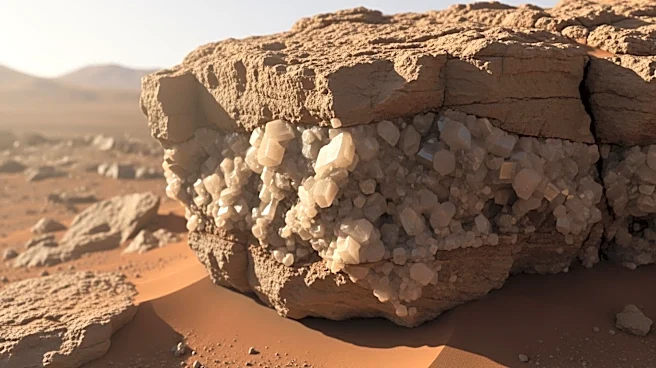
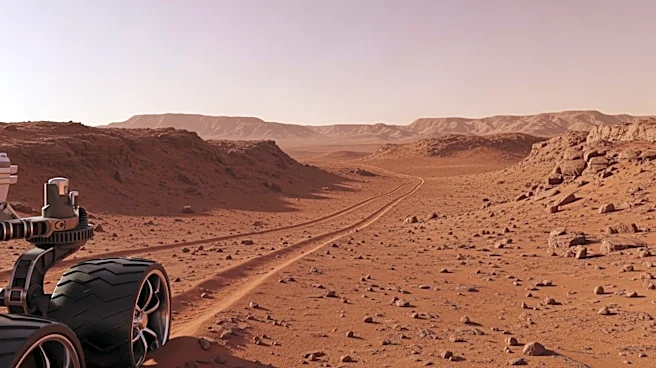
NASA's Curiosity and Perseverance rovers have captured 360-degree panoramas of Mars, providing detailed insights into the planet's geological history. Curiosity's panorama, taken between November and December
2025, showcases boxwork formations created by ancient groundwater flows. Perseverance's panorama, captured between December 2025 and January 2026, focuses on the Jezero Crater rim, revealing some of the oldest rocks in the solar system. These images help scientists understand Mars' past environments and its potential to have supported life.
Why It's Important?
These panoramic images are crucial for advancing our understanding of Mars' geological history and its potential for past life. By studying these formations, scientists can infer the planet's climatic and environmental conditions over billions of years. The data collected by the rovers contribute to the broader goals of NASA's Mars Exploration Program, which aims to uncover the planet's habitability and prepare for future human exploration. The findings could also inform the search for life on other planets by providing a comparative framework.
What's Next?
As the rovers continue their missions, they will explore new terrains and collect more data to fill gaps in our understanding of Mars' history. Curiosity will proceed to areas enriched in sulfates, while Perseverance will target ancient terrains like 'Singing Canyon.' The samples collected by Perseverance are expected to be returned to Earth for detailed analysis, potentially revealing more about Mars' past conditions and the possibility of life. These missions will continue to provide valuable insights into planetary science and astrobiology.