








What's Happening?
Pakistan's ambassador to China, Khalil Hashmi, recently visited Yangzhou to strengthen bilateral cooperation in investment, trade, and agriculture. During his visit, Hashmi met with Yangzhou's Party Secretary, Wang Jinjian, and Mayor, Zheng Haitao, to discuss
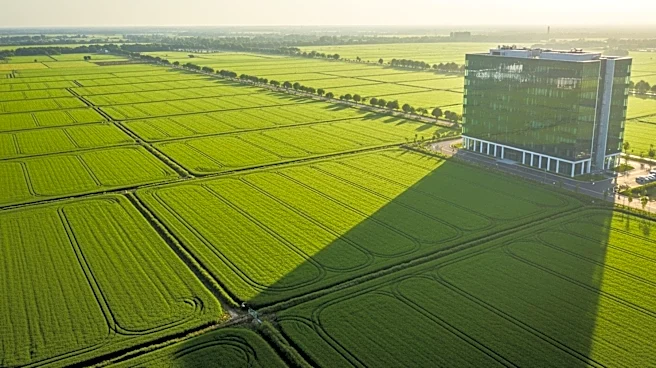
enhancing business-to-business linkages and collaboration under the Punjab–Jiangsu sister-province framework. The ambassador also visited FAMSUN, a company specializing in integrated agricultural technology solutions, and participated in a forum with leading agriculture enterprises. Discussions focused on agricultural modernization, agro-processing, and capacity building. Both parties agreed to leverage Yangzhou's industrial strengths in agriculture modernization, automotive manufacturing, and energy storage systems to deepen economic engagement. Hashmi invited Yangzhou-based companies to a B2B investment conference in Hangzhou and expressed interest in co-organizing investment roadshows in China and Pakistan.
Why It's Important?
This visit is significant as it underscores the growing economic ties between Pakistan and China, particularly in the fields of agriculture and technology. By fostering stronger business-to-business connections and exploring new areas of cooperation, both countries stand to benefit economically. For Pakistan, this could mean advancements in agricultural technology and increased foreign investment, which are crucial for its economic development. For China, particularly Yangzhou, it presents an opportunity to expand its industrial reach and influence in South Asia. The collaboration could lead to innovations in agricultural practices, improved supply chains, and enhanced vocational training, benefiting both nations' economies and societies.
What's Next?
Following the visit, both countries are expected to organize periodic investment roadshows and facilitate exchange visits by enterprises to further solidify their economic partnership. The upcoming B2B investment conference in Hangzhou will be a platform for Yangzhou-based companies to explore opportunities in Pakistan's information technology and telecommunications sectors. Additionally, the focus on agricultural modernization and food security innovation suggests that future collaborations may include projects in precision agriculture, cold-chain logistics, and digital farming. These initiatives could lead to long-term economic benefits and strengthen the strategic partnership between Pakistan and China.