








What's Happening?
In response to the Monroe Canyon Fire, which burned 74,000 acres in Utah, ranchers are using virtual fencing technology to manage livestock and protect recovering land. The fire left large areas of grazing land unusable, prompting the Utah Department
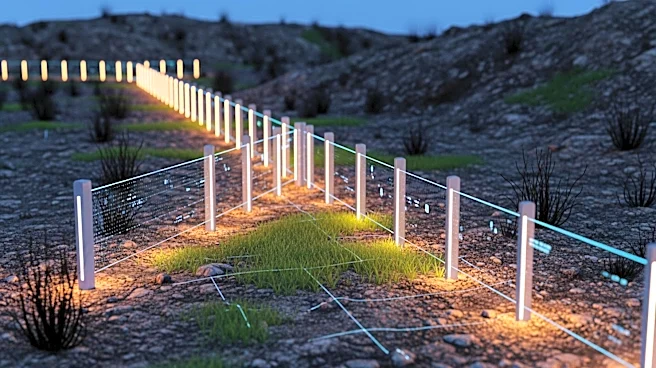
of Agriculture and Food to partially fund GPS-enabled collars for cattle. These collars create digital boundaries, emitting warnings and mild shocks to keep animals within designated areas. This technology is crucial for ranchers facing financial strain from rebuilding traditional fences and managing limited grazing space.
Why It's Important?
The adoption of virtual fencing represents a significant shift in agricultural practices, offering a cost-effective and efficient solution for managing livestock in fire-affected areas. This technology helps preserve fragile ecosystems while supporting ranchers' livelihoods. It also highlights the increasing role of technology in addressing environmental challenges and could serve as a model for other regions facing similar issues.
What's Next?
As vegetation begins to recover, particularly in higher elevations, the use of virtual fencing may expand to other areas affected by wildfires. The Utah Department of Agriculture and Food is offering this technology to ranchers impacted by last year's fires, potentially leading to broader adoption and further innovation in livestock management.