

What's Happening?
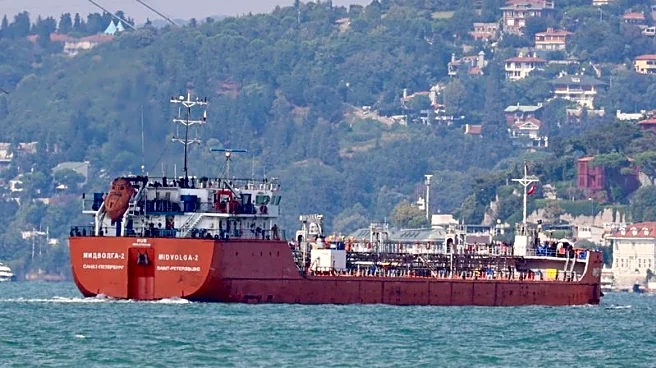
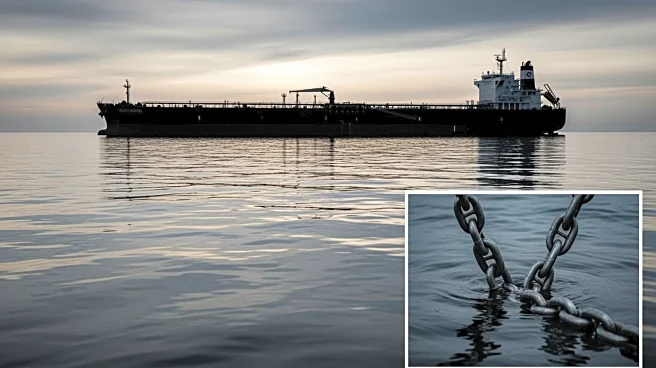
The United States has seized a Russian-flagged oil tanker, the Marinera, in the North Atlantic as part of its efforts to block oil exports from Venezuela. This action has been condemned by Russia as a violation of maritime law, labeling it as 'outright
piracy.' The operation was supported by RAF aircraft, indicating UK involvement. The seizure is part of a broader strategy by the U.S. to control Venezuelan crude oil sales indefinitely, marking an escalation in President Trump's approach to reshaping the global oil market. The incident occurred near Iceland, with Russian military vessels, including a submarine, reportedly nearby, although no direct confrontation took place.
Why It's Important?
This development is significant as it highlights the ongoing geopolitical tensions between the U.S. and Russia, particularly in the context of energy exports and sanctions. The U.S. aims to curb the flow of Venezuelan oil, which is a critical economic resource for the Venezuelan government. By seizing the tanker, the U.S. is not only enforcing its sanctions but also sending a strong message to Russia and other countries involved in similar activities. This move could further strain U.S.-Russia relations, which have been tense since Russia's invasion of Ukraine in 2022. The involvement of the UK suggests a coordinated Western effort to address what they perceive as illegal oil trading activities.
What's Next?
The seizure of the Marinera could lead to further diplomatic confrontations between the U.S. and Russia. Russia's condemnation of the act as piracy suggests that Moscow may seek to retaliate or escalate the situation diplomatically or militarily. The U.S. and its allies, including the UK, may continue to target other vessels involved in similar activities, potentially leading to more seizures. This could result in increased military presence in strategic maritime regions and heightened tensions in international waters. The situation may also prompt discussions at international forums regarding maritime law and the enforcement of sanctions.
Beyond the Headlines
The incident underscores the complexities of international maritime law and the challenges of enforcing sanctions in international waters. It raises questions about the legality of such seizures and the potential for misinterpretation or escalation into broader conflicts. The involvement of military forces in these operations highlights the blurred lines between law enforcement and military action in international relations. Additionally, the situation reflects the broader geopolitical struggle over energy resources and the influence of major powers in shaping global energy markets.