






What's Happening?
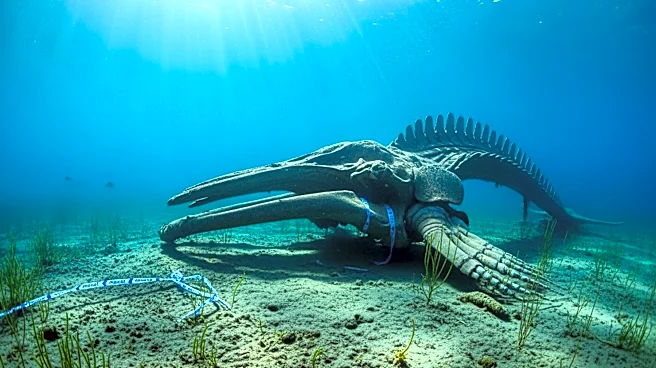
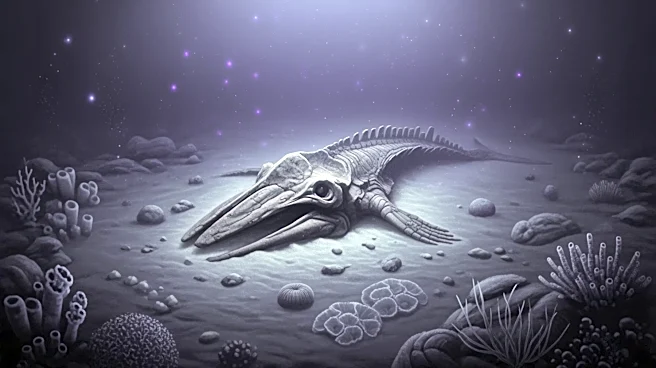
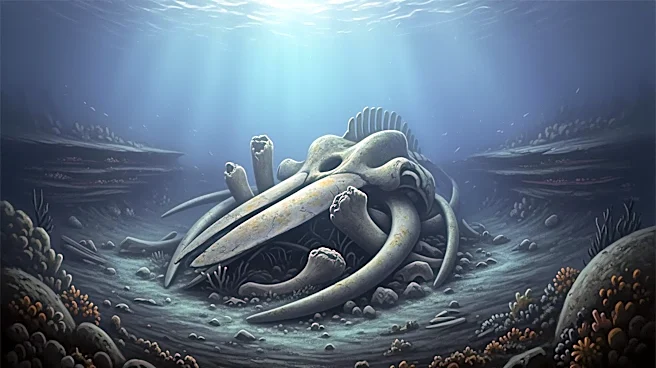
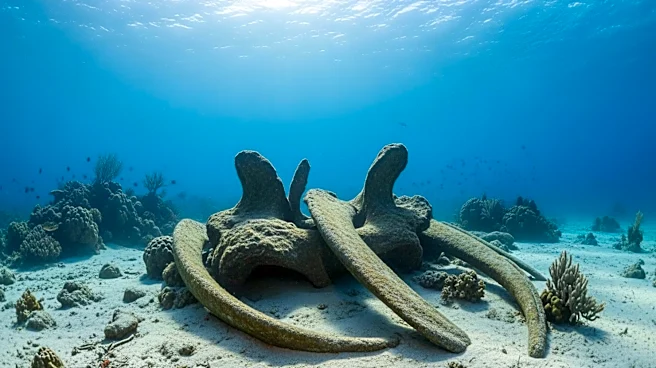
Scientists have discovered a deep-sea whale graveyard in the southeastern Indian Ocean, with bones dating back over 5 million years. Located 23,000 feet below the surface, this site is the deepest and oldest of its kind found to date. The graveyard hosts
a variety of marine life, including species that may be undocumented. The bones' preservation is attributed to their density and mineral coating, which protected them from degradation. The discovery provides insights into ancient marine ecosystems and the conditions that allowed for such preservation.
Why It's Important?
The discovery of this whale graveyard offers valuable information about ancient marine life and the ecosystems that thrived millions of years ago. It highlights the adaptability of life in extreme conditions and contributes to our understanding of deep-sea biodiversity. Such findings can inform conservation efforts and the study of marine biology, offering clues about how life can persist in harsh environments. The research also underscores the importance of deep-sea exploration in uncovering Earth's hidden history and the potential for discovering new species.