




What's Happening?
Massachusetts legislators are working on energy bills aimed at improving affordability and addressing climate change, with both the House and Senate passing their respective versions. A key focus is reforming 'Basic Service,' the default electricity supply
option provided by utilities. Currently, Basic Service customers face higher premiums, estimated by Synapse Energy Economics to add $22 per month to residential bills, due to utilities' reliance on short-term contracts and limited supplier participation in auctions. In contrast, municipal aggregation programs often offer lower rates by securing long-term contracts. The proposed legislation seeks to give utilities more flexibility in power supply contracts, which could reduce exposure to price spikes and diversify suppliers. Additionally, both bills include provisions for 'flexible interconnection,' a method to reduce costs and accelerate the connection of clean energy projects to the grid by allowing projects to occasionally disconnect.
Why It's Important?
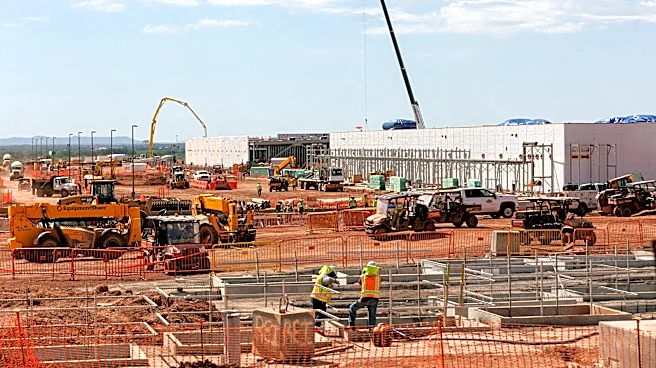
These legislative efforts are crucial for Massachusetts residents facing rising electricity costs and for advancing the state's climate goals. By addressing the inefficiencies in Basic Service, the bills aim to provide more stable and potentially lower electricity rates for consumers, particularly those who rely on utility-provided supply. The introduction of flexible interconnection is significant for the renewable energy sector, as high interconnection costs often render promising projects uneconomical. By reducing these costs, the state can encourage a faster buildout of solar, wind, and battery systems, mirroring successes seen in states like Texas. This move could accelerate the transition to clean energy, reduce reliance on fossil fuels, and enhance grid resilience, ultimately benefiting both the environment and the state's economy by fostering green energy development.
What's Next?
The immediate next step involves reconciling the differences between the House and Senate energy bills to pass a unified piece of legislation. While both chambers have included positive reforms like fixing Basic Service and implementing flexible interconnection, there are notable disagreements, such as the House's proposal to cut a billion dollars from the Mass Save program. Lawmakers will need to negotiate these differences to ensure a comprehensive and effective energy bill is enacted. The outcome will determine the extent to which Massachusetts can improve energy affordability, accelerate clean energy deployment, and maintain its energy efficiency programs. The success of these reforms will also depend on how utilities adapt to new contracting flexibilities and how quickly developers adopt flexible interconnection options for new projects.
Beyond the Headlines
The legislative debate in Massachusetts reflects a broader national challenge of balancing energy affordability with climate action. The issues with Basic Service highlight systemic problems in how electricity is procured and supplied, often leading to higher costs for consumers due to market structures and contracting practices. The push for flexible interconnection points to an evolving understanding of grid management, where intermittent renewable energy sources can be integrated more cost-effectively by adapting grid connection requirements. This approach could serve as a model for other states looking to accelerate their clean energy transitions without incurring prohibitive infrastructure costs. The disagreement over funding for energy efficiency programs like Mass Save also underscores the ongoing tension between immediate cost savings and long-term investments in energy conservation and decarbonization, revealing different strategic priorities within the climate policy landscape.