


What's Happening?
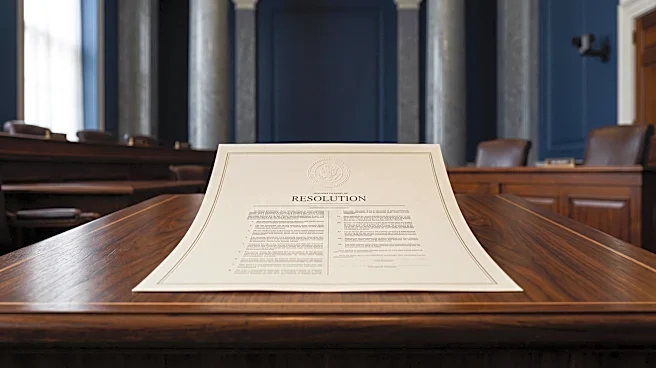
Congressman Dale Strong (AL) is among the co-sponsors of a bipartisan resolution introduced by Representatives Robert Aderholt (R-AL) and Danny K. Davis (D-IL) to recognize November as National Adoption Month, with November 21 designated as National Adoption Day.
The resolution aims to raise awareness about children awaiting adoption, celebrate families involved in adoption, and encourage Americans to consider adoption. This legislative effort is led by the Congressional Coalition on Adoption (CCA), a bicameral and bipartisan caucus dedicated to improving the adoption process and finding permanent homes for children.
Why It's Important?
This bipartisan resolution is significant because it highlights a critical social issue in the U.S.: the need for stable and loving homes for children in foster care. By formally recognizing National Adoption Month and Day, Congress draws national attention to the thousands of children awaiting adoption, fostering a culture of support for adoptive families and encouraging potential parents. This initiative can lead to increased public engagement, volunteerism, and legislative efforts to streamline adoption processes, reduce barriers, and provide resources for adoptive families. For children, it means a greater chance of finding permanency and the support needed to thrive, impacting their long-term well-being and societal contributions.
What's Next?
The resolution, with its broad bipartisan support, is expected to pass, reinforcing the national observance of Adoption Month. Following its passage, advocacy groups and child welfare organizations will likely leverage this congressional recognition to amplify their campaigns, host events, and provide information to prospective adoptive parents. The CCA will continue its work to identify legislative priorities that can further strengthen foster care and adoption systems. This includes exploring policies that offer financial assistance, improve post-adoption support services, and address legal complexities to make adoption more accessible and successful for families and children.
Beyond the Headlines
Beyond its immediate impact, this resolution reflects a broader societal commitment to child welfare and family formation. It underscores the idea that supporting adoption transcends political divides, focusing on the fundamental need for children to have stable environments. The emphasis on bipartisan cooperation in this area could also serve as a model for addressing other complex social issues. Furthermore, by promoting adoption, the resolution indirectly supports the reduction of the foster care population, which has significant long-term benefits for public resources and the overall health of communities. It also encourages a re-evaluation of societal perceptions of family, embracing diverse family structures formed through adoption.