







What's Happening?
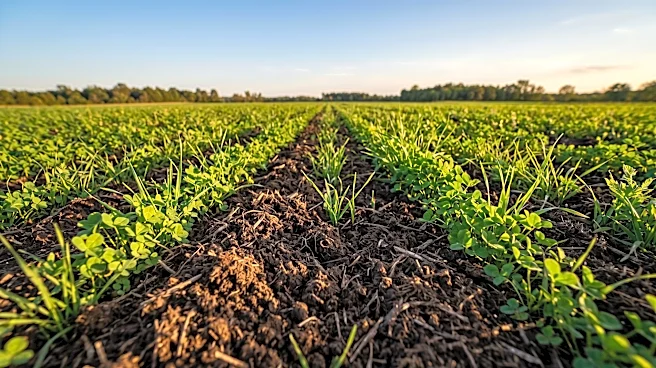
Michigan has initiated what officials are calling the nation's first public-private crop insurance program specifically designed for regenerative farming. This pilot program aims to incentivize and reward farmers who adopt practices that improve soil
health, such as using cover crops, natural fertilizers, no-till planting, livestock grazing, and crop diversity. The Michigan Department of Agriculture and Rural Development (MDARD) is leading this effort. The program will initially enroll approximately 80 farmers in Michigan's Thumb region. Crop insurance companies will utilize the state's field-by-field AI analysis of existing databases, combined with physical soil sampling throughout the year, to assess and reduce insurance premiums for participating farmers. This reduction in cost is based on the premise that regenerative practices lower the risk of crop failure by enhancing soil's ability to retain water and nutrients, thereby increasing crop yields and reducing reliance on chemical fertilizers. MDARD Director Tim Boring emphasized that healthier soil, characterized by a crumbly texture and rich organic material, fosters a thriving biological environment conducive to crop development and higher yields.
Why It's Important?
This initiative is significant for the U.S. agricultural sector as it represents a novel approach to integrating sustainable farming practices with financial incentives. By offering lower crop insurance prices, Michigan is directly addressing a key economic barrier that often prevents farmers from adopting regenerative methods. The program's success could serve as a model for other states and potentially influence future U.S. Farm Bills, which heavily subsidize crop insurance. Director Boring highlighted the substantial taxpayer implications of current, often expensive, risk and revenue protection approaches for farmers. This pilot could demonstrate a more cost-effective and environmentally beneficial alternative. If successful, it could lead to widespread adoption of regenerative farming, contributing to improved soil health, water quality, and reduced environmental impact across the country. Farmers stand to gain from reduced input costs, lower insurance premiums, and potentially higher, more stable yields, while the broader society benefits from enhanced ecological sustainability and food security.
What's Next?
The Michigan pilot program will proceed with enrolling approximately 80 farmers in the Thumb region. Over the coming year, crop insurance companies will work with the state to implement the AI-driven analysis and physical soil sampling to determine the reduced insurance prices for these participants. The data collected from this pilot will be crucial in evaluating the program's effectiveness in mitigating crop failure risks and encouraging regenerative practices. MDARD Director Tim Boring has expressed ambitions for the program to have both statewide and national impact, suggesting that the findings could inform future agricultural policies and potentially be incorporated into a U.S. Farm Bill. This would involve presenting the results and advocating for similar incentives at the federal level. The program's progress will likely be closely watched by agricultural stakeholders, environmental groups, and policymakers interested in sustainable agriculture and climate-resilient farming solutions.
Beyond the Headlines
The Michigan initiative delves into the deeper implications of agricultural sustainability and economic resilience. By linking crop insurance premiums to regenerative practices, the program acknowledges the long-term value of ecological stewardship in farming. This move challenges the traditional insurance model, which often focuses solely on historical yield data and external risks, by incorporating the proactive risk mitigation offered by healthy soil. It also highlights a growing recognition that climate change is making Michigan farmers more vulnerable to dramatic weather shifts, as noted in a recent report. Regenerative farming, by improving soil's resilience to extreme weather, becomes a critical adaptation strategy. Furthermore, the public-private partnership aspect signifies a shift towards shared responsibility in addressing environmental challenges within agriculture. This could foster greater collaboration between government, industry, and farmers, potentially leading to more innovative and holistic solutions for food production and environmental protection.