



What's Happening?
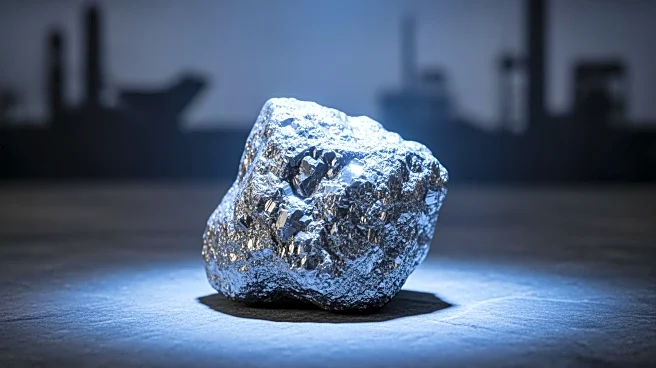
Europe is grappling with a critical mineral supply crisis, particularly concerning antimony, a mineral essential for defense and industrial applications. The EU's Critical Raw Materials Act has designated antimony as a strategic resource, with its importance
underscored by its use in ammunition and defense technologies. China, a major producer, has used antimony as a geopolitical tool, restricting exports and causing European prices to surge by 437% between 2023 and 2025. Greenland's untapped antimony deposits have become a focal point in the global scramble for critical minerals, with the U.S. and EU seeking to diversify away from Chinese dominance.
Why It's Important?
The antimony supply crisis highlights Europe's vulnerability to supply chain disruptions and its dependence on foreign suppliers for critical minerals. This situation underscores the need for Europe to strengthen its defense capabilities and secure access to essential resources. The geopolitical implications are significant, as the U.S. and EU compete with China for access to Greenland's resources. The crisis also emphasizes the strategic importance of critical minerals in defense manufacturing and clean energy transitions, impacting economic and security policies across the region.
What's Next?
Europe's efforts to secure critical minerals face regulatory and environmental challenges, while the U.S. accelerates its strategy to bolster domestic mining. The EU's push for self-sufficiency in critical minerals will require overcoming these hurdles and fostering closer cooperation with allies. The ongoing geopolitical tensions and trade dynamics will continue to influence the global supply chain for antimony and other critical minerals, shaping future policy decisions and international relations.