
What's Happening?
Former Defense Secretary Robert Gates appeared on 'Face the Nation' to discuss the current geopolitical challenges facing the United States. Gates highlighted the growing strategic threats posed by nuclear-armed
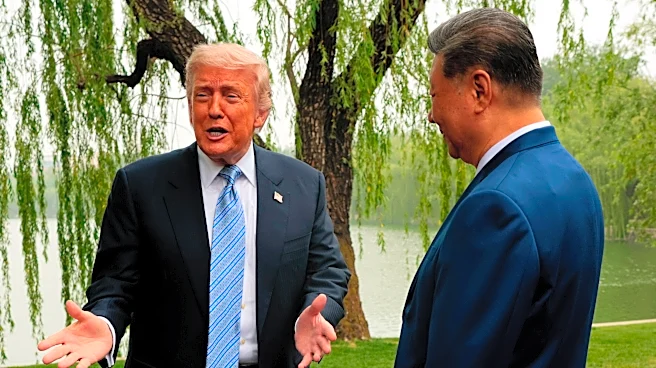
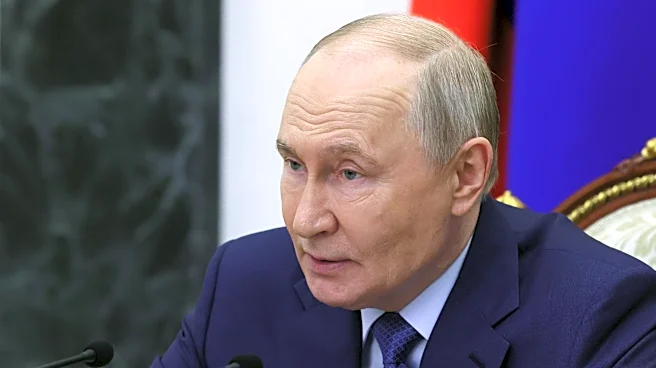
adversaries, specifically China and Russia. He noted that China is rapidly modernizing its nuclear arsenal and, along with Russia, will soon have nearly twice as many strategic nuclear warheads as the U.S. Gates emphasized the unprecedented nature of facing adversaries with such significant manufacturing and technological capabilities. He also discussed the delicate balance of U.S.-China relations, particularly in the context of Taiwan, and the importance of maintaining strategic ambiguity. Gates expressed concerns about the U.S. military's readiness and the need to replenish weapon stockpiles, drawing parallels to Ukraine's wartime economy. He also touched on the situation in the Middle East, particularly regarding Iran's nuclear ambitions, advocating for diplomatic solutions to prevent Iran from acquiring nuclear weapons.
Why It's Important?
The insights from Robert Gates underscore the complex and evolving nature of global power dynamics, with significant implications for U.S. national security and foreign policy. The strategic competition with China and Russia represents a shift from past conflicts, requiring the U.S. to adapt its military and diplomatic strategies. The discussion on Taiwan highlights the potential for regional instability and the importance of U.S. commitments to allies. Gates' comments on military readiness and industrial capacity point to the need for the U.S. to bolster its defense capabilities to maintain a strategic edge. The situation with Iran remains a critical issue, with potential repercussions for regional stability and global non-proliferation efforts. Gates' emphasis on diplomacy reflects a broader strategy to address these challenges without escalating military conflicts.
What's Next?
The U.S. is likely to continue its strategic focus on countering the influence of China and Russia, with potential policy adjustments to address military readiness and industrial capacity. The ongoing dialogue with China, particularly regarding Taiwan, will require careful management to avoid escalation. In the Middle East, diplomatic efforts to address Iran's nuclear program will remain a priority, with potential negotiations involving international partners. The U.S. may also seek to enhance its defense industrial base to ensure timely delivery of military supplies to allies like Taiwan. The broader geopolitical landscape will necessitate a balanced approach, combining military preparedness with diplomatic engagement to navigate these complex challenges.
Beyond the Headlines
Gates' remarks highlight the broader implications of shifting global power dynamics, including the ethical and strategic considerations of military engagement and arms sales. The emphasis on maintaining strategic ambiguity with Taiwan reflects the delicate balance of deterrence and diplomacy in U.S. foreign policy. The discussion on military readiness and industrial capacity raises questions about the sustainability of current defense strategies and the need for innovation in defense production. The situation with Iran underscores the challenges of non-proliferation and the potential for diplomatic solutions to address long-standing security concerns. These issues reflect broader trends in international relations, where traditional power structures are being challenged by emerging global players.