
What's Happening?
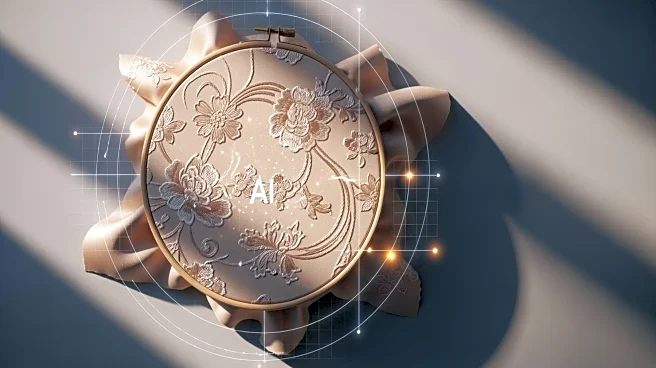
A study explores the use of AI technology to reconstruct and generate Qing Dynasty embroidery patterns, focusing on official rank badges. The research highlights the cultural significance of these patterns, which
reflect the political and social ideologies of their time. By digitizing these patterns, the study aims to preserve and innovate cultural heritage. The methodology involves using AI models like generative adversarial networks (GANs) and diffusion models to create high-quality digital representations of the embroidery. The study also emphasizes the importance of cultural gene extraction and structured knowledge representation to maintain the authenticity and cultural relevance of the generated patterns.
Why It's Important?
This research is significant as it demonstrates the potential of AI in preserving and revitalizing cultural heritage. By digitizing and reconstructing traditional embroidery patterns, the study provides a means to safeguard these cultural artifacts for future generations. The use of AI in this context not only aids in preservation but also opens up possibilities for innovative design applications, allowing for the integration of traditional art forms into modern contexts. This approach can enhance cultural appreciation and understanding, bridging the gap between historical art and contemporary technology.
Beyond the Headlines
The integration of AI in cultural heritage preservation raises questions about the balance between technological innovation and cultural authenticity. While AI offers powerful tools for digitization and design, it is crucial to ensure that the cultural and historical integrity of the artifacts is maintained. The study's focus on structured knowledge representation and cultural gene extraction highlights the importance of preserving the original context and meaning of the patterns. This approach can serve as a model for similar efforts in other cultural domains, promoting a thoughtful and respectful application of technology in heritage preservation.