
What's Happening?
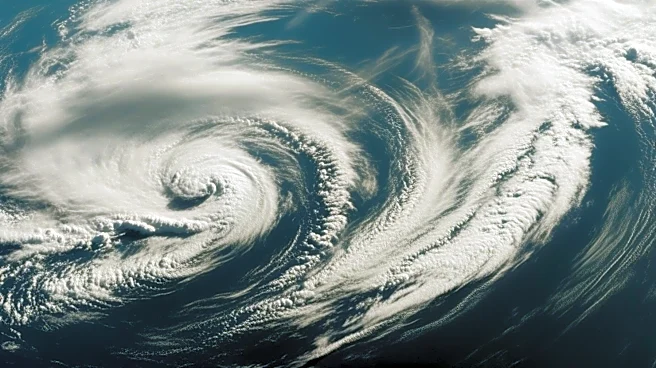
NASA's Terra satellite, equipped with the MODIS instrument, captured a striking image of cloud formations over the Gulf of Alaska on March 19, 2026. This image, taken on the last day of astronomical winter,
shows a complex interaction of atmospheric conditions. A low-pressure system over the Gulf combined with high pressure over eastern Russia and northern Alaska, causing cold Arctic air to flow southeast over the Alaska Peninsula. This led to the formation of cloud streets, which are parallel bands of clouds that form when cold, dry air moves over warmer ocean water, picking up moisture and heat. The image also shows von Kármán vortex streets, which are staggered, swirling cloud patterns formed when winds are diverted around elevated areas like islands. Additionally, a polar low, a small cyclonic formation, was observed southwest of Anchorage, bringing tropical storm-force winds and snow.
Why It's Important?
The captured cloud formations provide valuable insights into atmospheric dynamics and weather patterns in the region. Understanding these patterns is crucial for weather forecasting and climate studies, particularly in areas like Alaska where weather conditions can be extreme and rapidly changing. The data from such satellite observations help meteorologists predict weather events more accurately, which is vital for the safety and preparedness of communities in affected areas. Moreover, these observations contribute to broader climate research, offering clues about how climate change might be influencing weather systems in polar regions.
What's Next?
As the weather in Alaska transitions from winter to spring, meteorologists will continue to monitor atmospheric conditions closely. The end of April is expected to bring more unsettled weather, with an atmospheric river approaching the region, potentially leading to increased precipitation and storm activity. Continued satellite monitoring will be essential to track these developments and provide timely warnings to residents. Additionally, the data collected will be analyzed to improve understanding of polar weather systems and their responses to climate change.