





What's Happening?
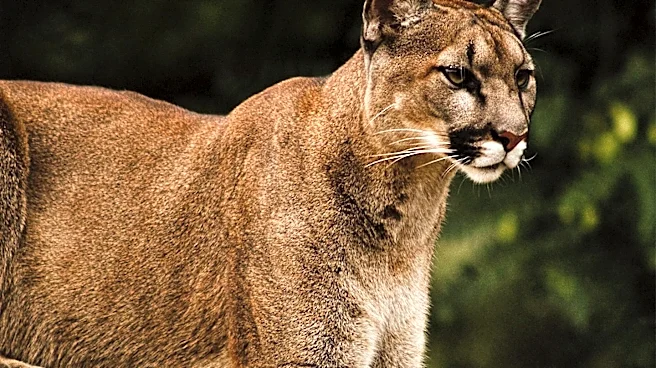
Multiple uncollared mountain lions were sighted in Woodland Hills over the weekend, with security cameras capturing at least two distinct individuals and a third large puma observed near Serrania Park. These sightings occurred weeks before the scheduled
December 2 ribbon-cutting of the Wallis Annenberg wildlife crossing over the 101 Freeway in Agoura Hills. The $114-million project, the largest of its kind in the nation, was designed to provide safe passage for mountain lions and other wildlife, expanding their territory and reducing inbreeding. Paul Edelman, deputy director of natural resources and planning for the Santa Monica Mountains Conservancy, noted that these uncollared lions offer rare glimpses into a secretive population beyond well-known individuals like the late P-22. Beth Pratt, president of the Wildlife Crossing Fund, mentioned that coyotes have already begun using the crossing, suggesting a promising start for the structure's intended purpose.
Why It's Important?
The increased presence of mountain lions in residential areas like Woodland Hills highlights the critical need for wildlife corridors and habitat connectivity in rapidly urbanizing regions. These sightings underscore the pressure on local mountain lion populations, which are often isolated by freeways and development, leading to genetic bottlenecks and increased mortality from vehicle collisions. The imminent opening of the Wallis Annenberg wildlife crossing is a landmark conservation effort aimed at addressing these issues, offering a vital link for the threatened species to expand their range and improve genetic diversity. The success of this crossing could serve as a national model for mitigating human-wildlife conflict and promoting ecological health in fragmented landscapes. For residents, the sightings emphasize the importance of coexisting with local wildlife and understanding the ecological dynamics of their environment.
What's Next?
The primary focus will be on the official opening of the Wallis Annenberg wildlife crossing on December 2. Following its inauguration, wildlife biologists and conservationists will closely monitor the crossing to assess its effectiveness in facilitating safe passage for mountain lions and other species. Tracking data and camera trap footage will be crucial in determining how quickly and extensively the animals adopt the new corridor. The recent sightings in Woodland Hills suggest that some mountain lions are already actively seeking new territories, potentially making them early users of the crossing. Continued public awareness campaigns will be important to educate residents on how to safely coexist with mountain lions and to report sightings, contributing to ongoing research and conservation efforts. The long-term success of the crossing will be measured by its impact on the genetic health and population stability of the region's mountain lions.
Beyond the Headlines
These mountain lion sightings and the impending wildlife crossing reflect a broader societal shift towards valuing and actively conserving biodiversity within human-dominated landscapes. The project represents a significant investment in ecological infrastructure, acknowledging that human development has profound impacts on natural ecosystems. It raises ethical questions about our responsibility to protect wildlife and restore ecological processes disrupted by urbanization. The initiative also highlights the power of collaborative efforts involving government agencies, non-profits, and public support in achieving ambitious conservation goals. Furthermore, the presence of these apex predators in suburban areas sparks discussions about the balance between human safety and wildlife preservation, prompting communities to adapt and implement strategies for harmonious coexistence. This development could influence future urban planning and infrastructure projects, advocating for integrated solutions that consider both human and ecological needs.