








What's Happening?
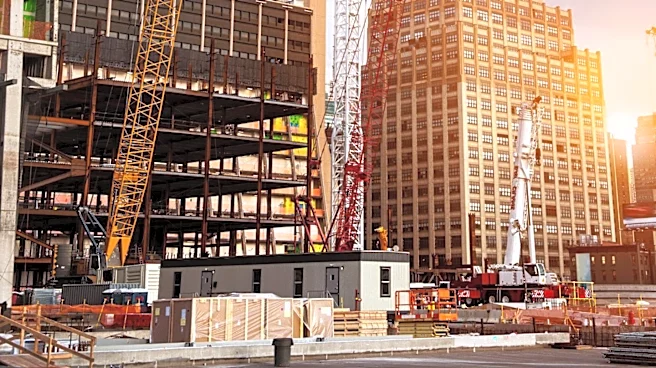
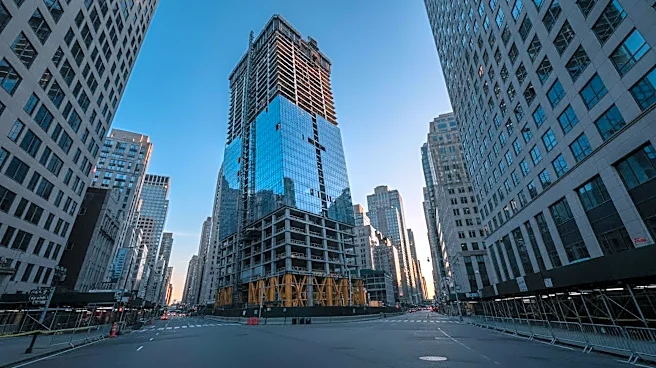
A construction incident at the former Pfizer headquarters in Manhattan has highlighted the challenges of converting office buildings into residential spaces. Two steel columns buckled, prompting evacuations and halting work on the project, which aims
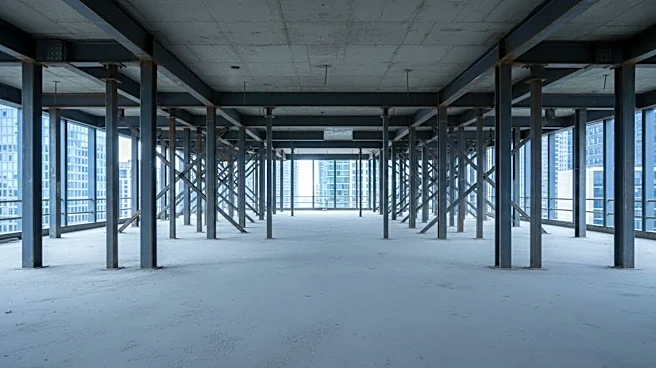
to transform two office buildings into approximately 1,600 apartments. The project involves adding more than a dozen stories to an older structure and redesigning another. The buckling occurred on the 21st floor of the newer building, leading to the installation of temporary supports while investigations are underway. Experts suggest that the added load from the conversion likely caused the structural failure. The incident underscores the complexity of adaptive reuse projects, which have gained popularity as a solution to the nationwide housing shortage.
Why It's Important?
The incident at the former Pfizer headquarters is significant as it raises questions about the safety and feasibility of large-scale office-to-housing conversions, a strategy increasingly adopted to address housing shortages in urban areas. Such projects are seen as a lifeline for revitalizing downtown business districts that have struggled since the COVID-19 pandemic. However, the structural challenges and potential risks involved in these conversions could impact future projects and investor confidence. The incident may lead to increased scrutiny and regulatory reviews of similar projects, potentially slowing down efforts to repurpose underused office spaces into much-needed housing.
What's Next?
As investigations continue, the construction industry and city officials will likely review the safety protocols and engineering practices involved in office-to-housing conversions. The outcome of the investigation could influence future building codes and regulations, potentially leading to stricter guidelines for adaptive reuse projects. Developers and engineers may need to reassess their approaches to ensure the structural integrity of converted buildings. The incident could also prompt a reevaluation of ongoing and planned projects, as stakeholders seek to prevent similar occurrences and maintain public trust in the safety of these conversions.
Beyond the Headlines
The construction scare at the former Pfizer headquarters highlights broader issues related to urban development and sustainability. Adaptive reuse projects are seen as environmentally beneficial, as they reduce the need for new construction and minimize waste. However, the incident underscores the technical challenges and risks associated with modifying existing structures. It also raises questions about the balance between innovation and safety in urban planning. As cities continue to grapple with housing shortages, the need for creative yet safe solutions becomes increasingly critical.