


What's Happening?
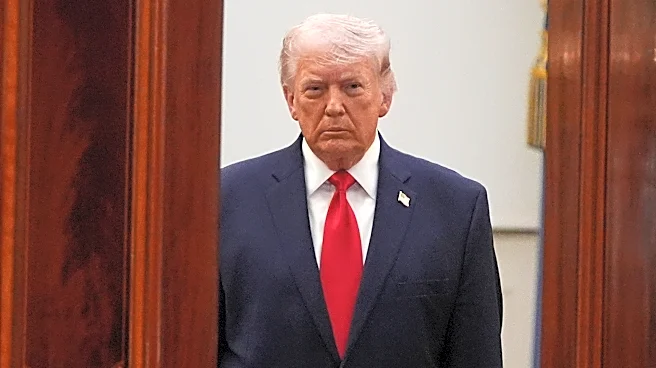
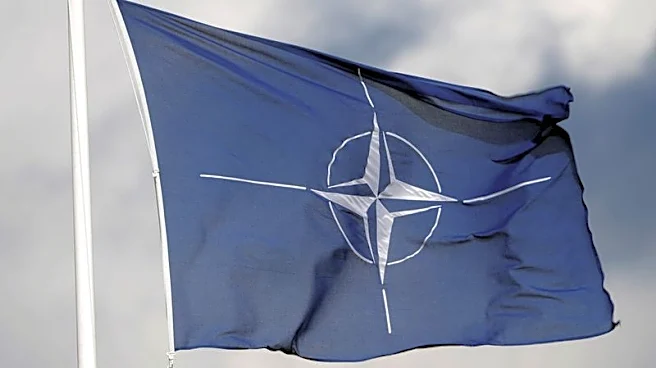
President Donald Trump is reconsidering the United States' involvement in NATO due to dissatisfaction with allies who have not supported the U.S. in its conflict with Iran. Trump has expressed frustration with NATO countries that have restricted U.S. military
operations from their bases. Despite a 2023 law requiring a two-thirds Senate majority for withdrawal, Trump is exploring options to reduce U.S. involvement, such as cutting funding or reducing troop presence in Europe. Secretary of State Marco Rubio and NATO Ambassador Matt Whitaker have indicated that all options are being evaluated. The administration's stance has sparked bipartisan criticism, with some lawmakers emphasizing the importance of NATO for U.S. security.
Why It's Important?
The potential withdrawal or reduction of U.S. involvement in NATO could significantly alter global security dynamics. NATO has been a cornerstone of Western defense since World War II, and any changes could weaken collective security against threats like Russia. Economically, reducing U.S. military commitments could save funds but might also destabilize regions reliant on U.S. military presence. Politically, this move could strain U.S. relations with European allies and embolden adversaries. The decision reflects ongoing debates about the U.S.'s role in international alliances and its approach to foreign policy under Trump's leadership.
What's Next?
If Trump pursues a reduction in NATO involvement, it could lead to legislative battles in Congress, where there is strong support for the alliance. European allies may seek to strengthen their own defense capabilities or form new alliances. The administration may face legal challenges if it attempts to bypass the 2023 law. Additionally, the decision could influence upcoming elections, as foreign policy becomes a key issue. The international community will closely watch for any shifts in U.S. military strategy and commitments.