



What's Happening?
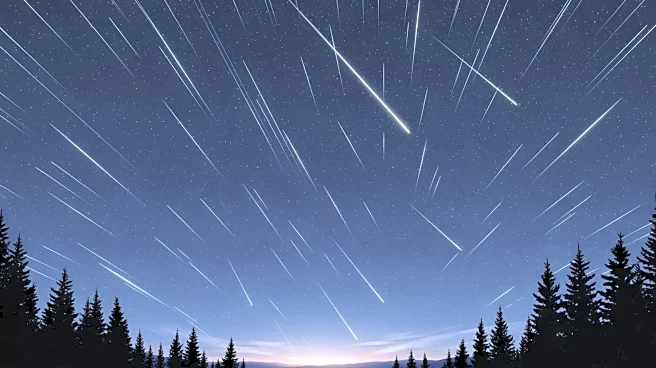
The Leonid meteor shower, an annual celestial event, is currently peaking and offers a second chance for optimal viewing due to clearer skies. This meteor shower occurs when Earth passes through the debris trail of Comet 55P/Tempel-Tuttle, producing fast-moving
meteors that can reach speeds of up to 44 miles per second. The peak period is from November 16 to 18, with the best viewing conditions occurring during the predawn hours when the waning crescent moon provides minimal light interference. Viewers can expect to see approximately 15 meteors per hour.
Why It's Important?
The Leonid meteor shower is a significant event for both amateur and professional astronomers, providing a spectacular display of natural fireworks. It serves as an opportunity for public engagement with science and the night sky, fostering interest in astronomy. The minimal moonlight during the peak enhances the visibility of the meteors, making this year's event particularly noteworthy. Such events also highlight the importance of preserving dark skies and reducing light pollution to ensure future generations can enjoy these natural phenomena.
What's Next?
As the Leonid meteor shower continues, enthusiasts are encouraged to find dark locations away from city lights to maximize their viewing experience. The event serves as a reminder of the ongoing need to address light pollution issues. Additionally, the meteor shower season continues with other events, providing further opportunities for skywatching and public engagement with astronomy.