



What's Happening?
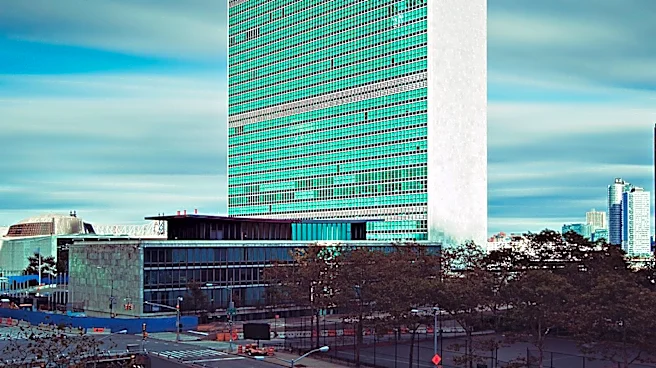
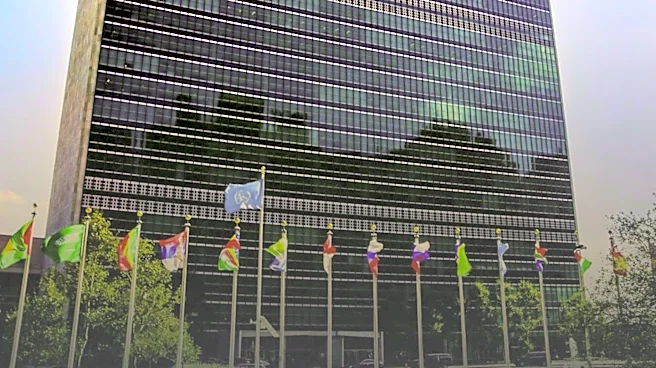
France is actively participating in discussions concerning the reform of the United Nations system, specifically within the framework of UN80. During the First Committee of the United Nations General Assembly, France endorsed the European Union's statement
and presented national remarks. France emphasized its commitment to disarmament forums as essential frameworks for substantive discussions that can lead to negotiations. However, France noted the current paralysis of the Conference on Disarmament, the primary multilateral body for negotiating disarmament treaties, due to a procedural deadlock over observer states. To improve the efficiency of the First Committee, France, in collaboration with Germany, has proposed concrete measures such as reducing statement times, limiting resolutions to those with substantive changes, and shortening the overall duration of the Committee's segments.
Why It's Important?
France's active role in advocating for UN reform and disarmament forum efficiency underscores a broader international recognition of the need to modernize global governance structures. The paralysis of the Conference on Disarmament highlights a significant challenge in addressing critical global security issues, as it impedes the negotiation of vital treaties like the Fissile Material Cut-off Treaty (FMCT). The proposed reforms aim to streamline processes and enhance the effectiveness of these forums, which is crucial for maintaining international peace and security. The financial fragility of disarmament forums, also noted by France, poses a threat to the sustainability of disarmament conventions, potentially undermining global efforts to control weapons and prevent proliferation. This initiative reflects a push to ensure that international bodies remain relevant and capable of responding to contemporary global challenges.
What's Next?
France will continue to play its part in the ongoing discussions on UN system reform within the UN80 framework. The proposals to improve the efficiency of the First Committee will be subject to further debate and potential adoption by member states. Overcoming the procedural deadlock in the Conference on Disarmament will require sustained diplomatic efforts to launch negotiations on key issues like the FMCT. France's continued support for the United Nations Institute for Disarmament Research (UNIDIR) also indicates a commitment to preserving independent expertise in disarmament. The success of these reform efforts will depend on the collective will of UN member states to overcome existing obstacles and implement changes that enhance the effectiveness and responsiveness of the international system.
Beyond the Headlines
The French initiative for UN reform and disarmament efficiency reflects a deeper concern about the efficacy of multilateralism in an increasingly complex global environment. The procedural deadlocks and financial vulnerabilities of key international bodies can erode trust in global governance and hinder collective action on pressing issues. By advocating for streamlined processes and greater accountability, France is pushing for a more agile and responsive international system. This effort is not merely about administrative changes but about strengthening the capacity of the UN to address existential threats, from nuclear proliferation to regional conflicts. The long-term implications could include a more robust and legitimate UN, better equipped to foster international cooperation and maintain global stability, or, conversely, a continued decline in its influence if reforms are not successfully implemented.