





What's Happening?
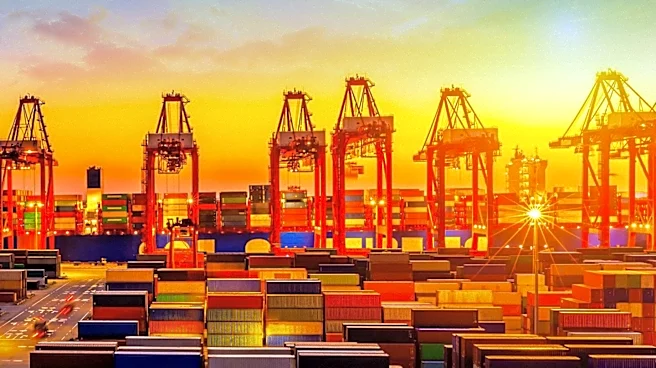
Chinese President Xi Jinping's diplomatic efforts, termed 'Xiplomacy,' emphasize global cooperation and shared development. Highlighted by projects like the transformation of Greece's Port of Piraeus, Xi's approach focuses on mutual benefits and improving
local communities' lives. His vision extends to various international projects, including the Jakarta-Bandung High-Speed Railway and Chancay Port in Peru. Xi's commitment to global development is also evident in his support for Africa, where China has invested in infrastructure and public health initiatives. Xi's diplomatic philosophy advocates for modernization and prosperity for all nations, challenging the notion of development as a privilege for a few.
Why It's Important?
Xi's diplomatic strategy reflects China's growing influence in global affairs, promoting a model of development that prioritizes cooperation and mutual benefit. This approach has significant implications for international relations, as it challenges traditional Western-led development paradigms. By investing in infrastructure and public health in developing regions, China positions itself as a key partner in global development, potentially reshaping geopolitical alliances. Xi's emphasis on shared prosperity aligns with global calls for more equitable development, addressing disparities between rich and poor nations.
Beyond the Headlines
Xi's vision of a shared future for humanity includes addressing global challenges like climate change. China's role in the Paris Agreement negotiations and its commitment to reducing carbon emissions highlight its leadership in environmental governance. Xi's advocacy for sustainable development and ecological protection underscores the interconnectedness of global challenges, emphasizing the need for collective action. This approach not only enhances China's international standing but also sets a precedent for integrating environmental considerations into development strategies.