







What's Happening?
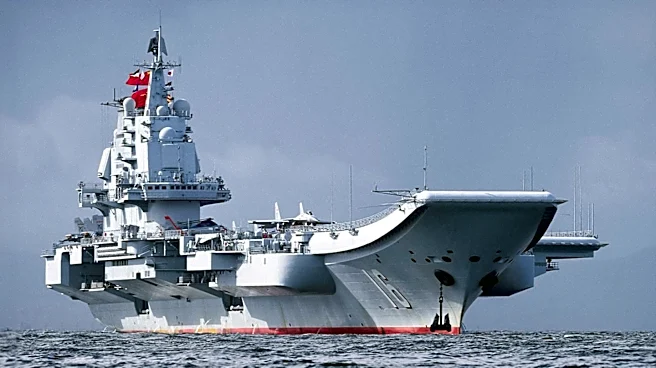
A report by the Center for Strategic and International Studies (CSIS) suggests that China is likely planning to launch its first nuclear-powered aircraft carrier, possibly a Type 004, by the end of 2027. This assessment is based on satellite images captured
from China’s Dalian Shipyard, which show rapid construction progress. The images indicate that hull components have been prefabricated and assembled into a recognizable hull in less than two years, demonstrating China's advanced shipbuilding capabilities. The vessel's hull, measuring 322 meters long and 46 meters wide, is larger than any other surface combatant in the Chinese navy and its design is consistent with naval aircraft carriers, not civilian ships. Experts believe the carrier could be equipped with four aircraft launch catapults, a flight deck, and a hangar, significantly enhancing China's ability to conduct sustained naval aviation operations over greater distances.
Why It's Important?
The potential launch of China's first nuclear-powered aircraft carrier by 2027 marks a significant advancement in its naval capabilities and has profound implications for global power dynamics, particularly concerning the U.S. A nuclear-powered carrier would allow China to project power far beyond its immediate waters, enabling longer deployments and higher speeds without the need for frequent refueling. This development would bring China closer to matching the blue-water capabilities of the U.S. Navy, intensifying strategic competition in the Indo-Pacific region and beyond. The rapid pace of construction also highlights China's growing industrial and technological prowess in defense manufacturing. For the U.S., this means a more formidable naval rival, potentially requiring adjustments in defense strategy, resource allocation, and alliance building to maintain its maritime dominance and regional stability.
What's Next?
If the nuclear-powered aircraft carrier enters service as projected, it will significantly alter the naval balance of power, particularly in the Pacific. This development will likely prompt increased scrutiny and analysis from U.S. defense strategists and intelligence agencies. The U.S. and its allies may respond by accelerating their own naval modernization programs, enhancing joint exercises, and strengthening regional security partnerships to counter China's expanding maritime influence. The operationalization of such a vessel would also necessitate a re-evaluation of potential flashpoints and strategic choke points in international waters. Furthermore, it could spur a new phase of naval arms race, with other nations potentially seeking to develop or acquire similar advanced naval assets to protect their interests and project power.
Beyond the Headlines
The construction of a nuclear-powered aircraft carrier by China is not merely a military upgrade; it symbolizes a broader geopolitical ambition to challenge the existing global order and establish itself as a preeminent maritime power. This move reflects China's long-term strategy to secure its economic interests, protect its trade routes, and exert influence in distant regions. The technological leap to nuclear propulsion also signifies China's growing self-reliance and innovation in critical defense technologies, reducing its dependence on foreign suppliers. Beyond military implications, this development could foster a sense of national pride and bolster China's image as a rising superpower. However, it also carries the risk of increased regional tensions and potential miscalculations, as major powers navigate a more complex and contested maritime environment. The ethical considerations surrounding the deployment of such powerful military assets in international waters will also become a more prominent topic of discussion.