





What's Happening?
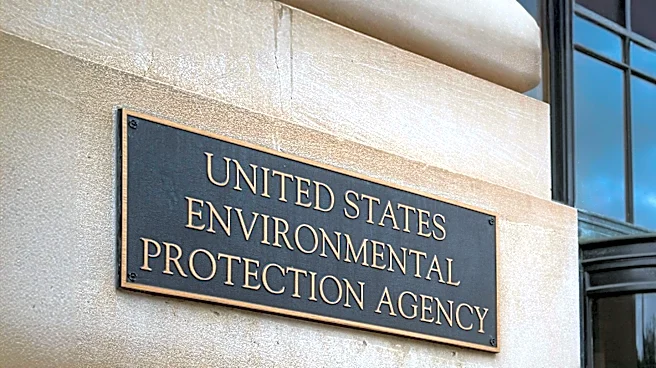
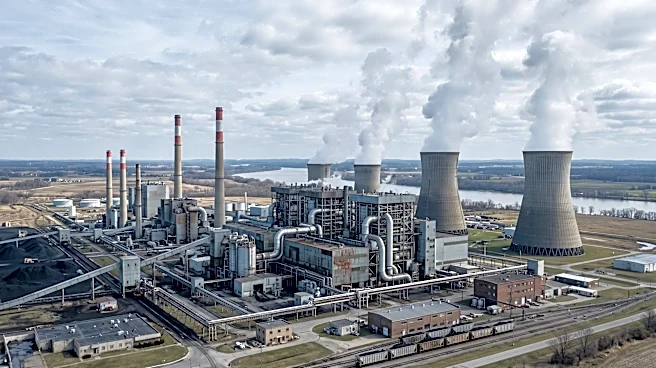
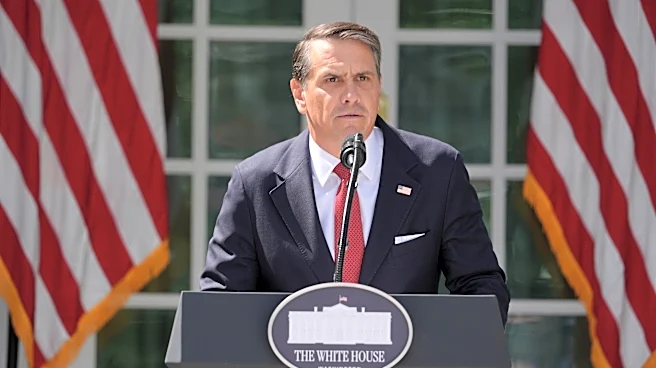
The Environmental Protection Agency (EPA) has announced the repeal of rules limiting planet-warming greenhouse gas emissions from coal and fossil gas power plants. EPA Administrator Lee Zeldin stated the move aims to protect American energy and ensure
affordable electricity, framing it as a reversal of previous administrations' 'war on coal.' However, the EPA's own analysis contradicts this, projecting that retail electricity prices will be 0.7% higher in 2030, with price drops only occurring in the mid-2030s and beyond. Environmental and health advocacy groups, led by the American Lung Association, have filed a petition for review, challenging the EPA's final rule. The EPA is also attempting to prevent future administrations from regulating climate pollution from power plants, claiming a lack of Clean Air Act authority for such regulations.
Why It's Important?
This EPA action has significant implications for U.S. environmental policy, public health, and the energy sector. The repeal could lead to an estimated $1.0 trillion in health costs, over 80,000 additional premature deaths, and more than $1.8 trillion in cumulative climate-related harms through 2047, according to the Environmental Defense Fund. Economically, the projected increase in electricity prices contradicts the administration's stated goal of affordability. Furthermore, the EPA's attempt to limit its own authority under the Clean Air Act could undermine future efforts to combat climate change and complicate ongoing climate lawsuits against oil producers. The move also supports the continued operation of aging coal plants, even when economically unviable, potentially costing ratepayers billions and increasing pollution from mercury and sulfur dioxide.
What's Next?
The EPA's repeal will face immediate legal challenges from environmental and health organizations, likely leading to prolonged court battles. The attempt to redefine the EPA's authority under the Clean Air Act will be a key point of contention, potentially reaching the Supreme Court. The administration's broader energy policies, including efforts to keep coal plants operational, will continue to be scrutinized for their economic and environmental impacts. Meanwhile, states like California are advancing their own climate legislation, such as bills to test and remediate homes damaged by wildfire smoke and promote home electrification, indicating a divergence in climate policy at federal and state levels. The outcome of these legal and legislative battles will significantly shape the future of U.S. climate policy and energy production.
Beyond the Headlines
The EPA's actions reflect a deeper ideological struggle over the role of government regulation, environmental protection, and economic priorities in the U.S. The administration's rhetoric of 'energy emergency' and 'clean beautiful coal' highlights a political narrative that prioritizes fossil fuel industries over climate action and public health. This approach not only has tangible environmental and health consequences but also signals a broader cultural resistance to climate science and international climate agreements. The legal challenges to the EPA's authority could set precedents for future environmental regulations, potentially weakening the federal government's ability to address climate change. This ongoing conflict underscores the profound divisions within American society regarding climate policy and the balance between economic development and environmental stewardship.