







What's Happening?
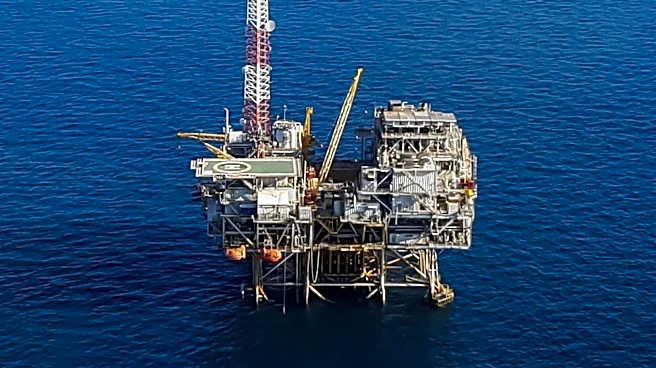
Equinor, Norway's state oil company, reported a significant increase in profits, nearly doubling to $11.5 billion in the second quarter of 2026. This surge is attributed to the rise in oil and gas prices due to the ongoing conflict between the US-Israel
and Iran, which has disrupted oil flows through the Strait of Hormuz. The conflict has led to a spike in Brent crude prices, fluctuating between $75 and over $100 per barrel. Equinor's increased production has allowed it to capitalize on these higher prices, resulting in strong financial performance. The company's president, Anders Opedal, emphasized the importance of reliable energy supply in a volatile geopolitical climate.
Why It's Important?
The increase in Equinor's profits highlights the broader impact of geopolitical tensions on global energy markets. The disruption in oil supply routes, particularly through the Strait of Hormuz, has significant implications for global oil prices and energy security. As a major supplier, Equinor's ability to ramp up production and benefit from higher prices underscores the strategic importance of energy companies in stabilizing markets during conflicts. However, this situation also raises concerns about energy affordability, as higher prices can lead to increased costs for consumers and businesses, particularly in regions heavily reliant on imported energy.
What's Next?
The continuation of hostilities between the US-Israel and Iran suggests that oil prices may remain volatile. Equinor and other energy companies may continue to benefit from elevated prices, but this could also prompt calls for increased investment in renewable energy to reduce dependency on fossil fuels. Additionally, the geopolitical situation may lead to further diplomatic efforts to stabilize the region and secure energy supply routes. Stakeholders, including governments and energy companies, will likely monitor the situation closely to mitigate risks and explore alternative energy strategies.
Beyond the Headlines
The conflict and resulting energy market fluctuations highlight the ethical and environmental challenges associated with fossil fuel dependency. While companies like Equinor profit from higher prices, there is growing pressure from climate advocacy groups to transition towards renewable energy sources. The situation underscores the need for a balanced approach that addresses both energy security and environmental sustainability. The ongoing debate over energy policy may influence future regulatory decisions and investment priorities, potentially accelerating the shift towards cleaner energy solutions.