
What's Happening?
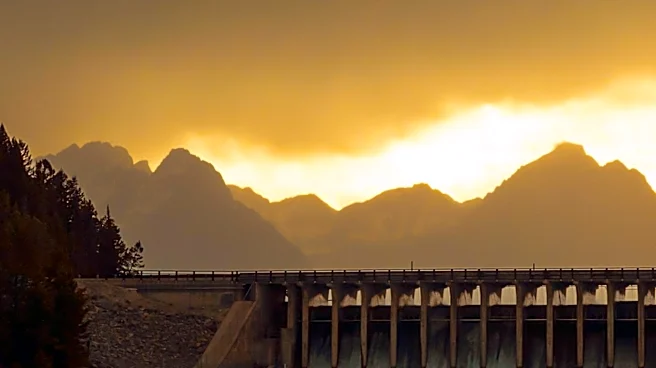
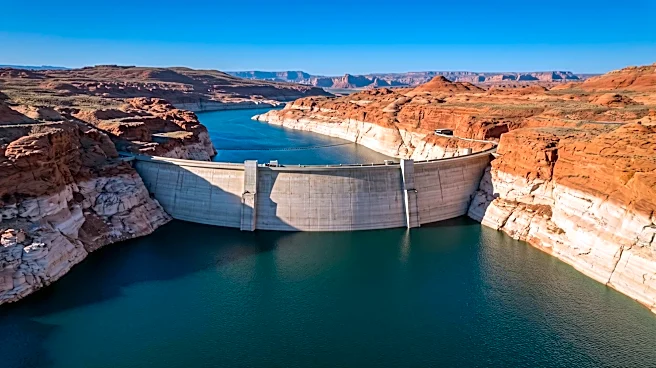
Glen Canyon Dam on the Colorado River is facing critically low water levels, with Lake Powell currently just 27.85 feet above the minimum power pool elevation of 3,490 feet. At this point, the dam's eight
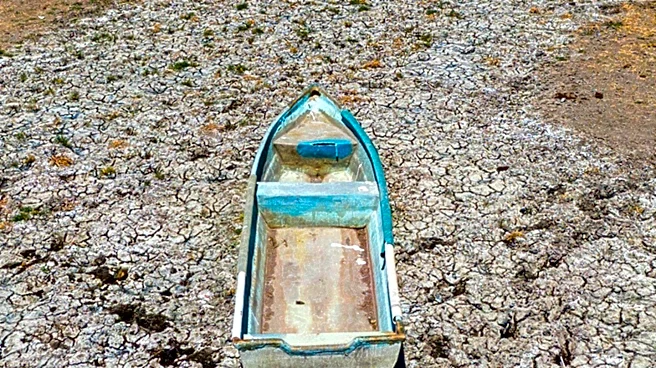
turbines, which generate up to 1,320 megawatts of electricity for millions of homes in the Southwest, would shut down to prevent cavitation damage to the machinery. The official gauge designed to measure Lake Powell's water levels was never built to read below 3,477.5 feet, indicating that engineers in the 1950s did not anticipate such extreme lows. The lake is now approximately 40 feet from this unmeasurable depth. This situation is exacerbated by record-low inflows, with July seeing only 9% of average unregulated inflow, and the forecast for the full water year at 37% of average due to the worst snowpack on record last winter.
Why It's Important?
The potential shutdown of power generation at Glen Canyon Dam poses a significant threat to the energy supply and stability of the Southwestern United States. The dam's output is crucial for millions of residents, and its loss would necessitate alternative, potentially more expensive or less reliable, power sources. This crisis highlights the severe impact of prolonged drought and climate change on critical infrastructure and natural resources. The unprecedented low water levels also underscore the challenges in water management and allocation across the Colorado River Basin, affecting agriculture, municipal water supplies, and ecological systems. The situation reveals a critical vulnerability in the region's energy and water security, demanding urgent and long-term solutions.
What's Next?
To mitigate the immediate crisis, the Bureau of Reclamation has already implemented measures, including reducing water releases to Lake Mead and increasing releases from Flaming Gorge Dam upstream to bolster Lake Powell's levels. However, these are temporary solutions, and the August 24-Month Study projects Lake Powell will continue to drop, potentially falling below 3,510 feet in water year 2027. The agency's next full set of projections will be released in October, which will provide a clearer outlook. If water levels continue to decline, reliance on the dam's river outlet works, which are not designed for sustained use and have shown signs of cavitation erosion, would become necessary, posing further operational risks. Long-term solutions will likely involve more drastic water conservation measures and re-evaluation of water allocation agreements among basin states.
Beyond the Headlines
This crisis at Glen Canyon Dam is more than just an environmental or energy issue; it represents a profound challenge to the foundational assumptions of water management in the American West. The fact that the dam's gauges were not designed to measure such low levels speaks to a historical optimism that has been shattered by current climate realities. The reliance on inter-reservoir transfers, like drawing down Flaming Gorge, illustrates the interconnectedness and fragility of the entire Colorado River system. This situation could trigger significant legal and political battles over water rights and usage, potentially reshaping the economic and social landscape of the Southwest. It also brings into sharp focus the need for innovative engineering solutions and policy reforms to adapt to a future with scarcer water resources, pushing the boundaries of how large-scale infrastructure can cope with unprecedented environmental shifts.