









What's Happening?
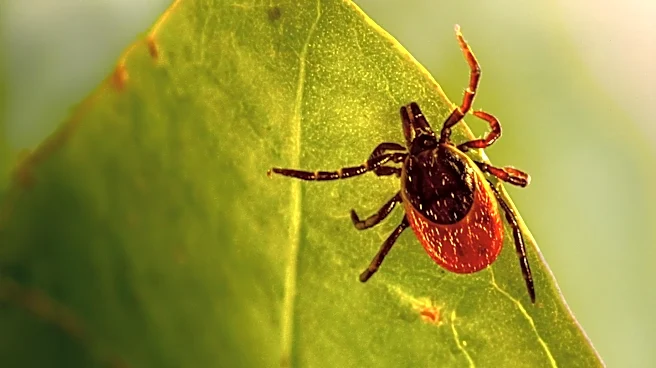
Nantucket Cottage Hospital has diagnosed 57 cases of alpha-gal syndrome (AGS) in the past three months, a significant increase compared to the previous two years combined. This summer, July saw 22 cases, August 20, and September 15, far exceeding the previous monthly
high of four cases. AGS is a meat allergy primarily transmitted by Lone Star ticks, causing allergic reactions to mammal meat and sometimes dairy products. Historically, Lone Star ticks were not a concern on Nantucket, but their migration northward, attributed to warming weather and climate change, has brought AGS to the island. While Nantucket's numbers are still lower than Martha's Vineyard, where AGS is considered an epidemic, the recent spike indicates a growing public health issue.
Why It's Important?
The surge in alpha-gal syndrome cases on Nantucket highlights a significant public health challenge driven by environmental changes. The northward expansion of Lone Star ticks, linked to warming weather and climate change, directly impacts human health by introducing a new and potentially severe allergen into previously unaffected populations. This development affects the lifestyle and dietary habits of individuals diagnosed with AGS, as the allergy can be life-threatening in serious cases. The economic implications could include changes in local food consumption patterns and potential impacts on the tourism industry if the perception of tick-borne illnesses increases. The situation also underscores the broader consequences of climate change on disease vectors and human well-being in U.S. coastal communities.
What's Next?
As alpha-gal syndrome cases continue to rise, public health officials and medical professionals on Nantucket will likely focus on increased awareness campaigns regarding tick bite prevention and AGS symptoms. Janie Hobson-Dupont, who started an AGS support group, advises those diagnosed not to panic, as the allergy's long-term prognosis is still uncertain, with some cases potentially resolving over time. Research into effective treatments and a cure for AGS is ongoing, as currently, there are no known definitive solutions. The medical community will also continue to investigate why some individuals bitten by Lone Star ticks develop AGS while others do not, and why the ticks have adapted differently to various geographic locations like Martha's Vineyard compared to Nantucket.
Beyond the Headlines
The emergence of alpha-gal syndrome on Nantucket, driven by the northward migration of Lone Star ticks, represents a deeper ecological shift with significant implications for public health and environmental policy. It underscores how climate change can alter ecosystems, leading to the spread of disease vectors into new regions. This situation challenges traditional understandings of local epidemiology and necessitates a reevaluation of public health strategies to adapt to evolving environmental conditions. The unknowns surrounding AGS, such as its variable impact on individuals and the lack of a cure, highlight the need for sustained scientific research and interdisciplinary approaches to address complex health issues arising from environmental changes. It also raises ethical considerations regarding individual responsibility for prevention versus systemic responses to climate-driven health threats.