








What's Happening?
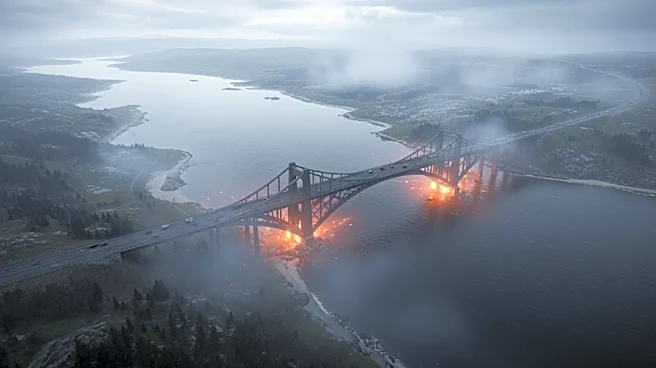
Ukrainian forces have escalated their military operations against Russian logistics, focusing on key infrastructure such as the Chonhar Bridge in Russian-occupied Kherson Oblast. This bridge, a vital route for Russian military supplies, was targeted by
Ukrainian drone strikes, leading to its temporary closure. The strikes are part of a broader campaign by Ukraine to disrupt Russian military logistics, including fuel deliveries to Crimea. Ukrainian Commander-in-Chief Oleksandr Syrskyi has approved a development plan for the Rocket Forces and Artillery through 2030, emphasizing the need for modern artillery systems and reconnaissance capabilities. The plan aims to enhance Ukraine's ability to strike at various operational depths of Russian forces.
Why It's Important?
The intensified strikes by Ukraine signify a strategic shift in its military approach, aiming to weaken Russian supply lines and military infrastructure. This could potentially alter the dynamics of the conflict, as disrupted logistics may hinder Russian military operations in occupied territories. The development plan for Ukraine's artillery forces indicates a long-term commitment to strengthening its military capabilities, which could influence future engagements. The situation also highlights the ongoing geopolitical tensions in the region, with potential implications for international relations and security policies.
What's Next?
As Ukraine continues to target Russian logistics, further disruptions in supply routes are expected, potentially leading to increased military engagements. The international community, particularly NATO and EU countries, may respond with additional support for Ukraine or increased sanctions against Russia. The development of Ukraine's military capabilities, as outlined in the new plan, will likely continue, with a focus on enhancing strike systems and reconnaissance. The situation remains fluid, with potential for further escalation or diplomatic interventions.