






What's Happening?
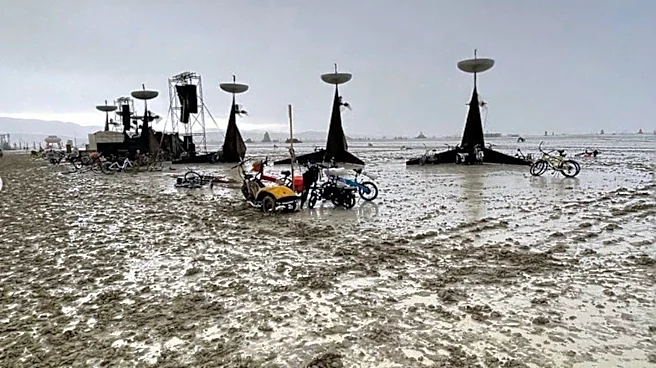
The civil association 'Foro Mundial de la Bicicleta 12' (FMB12) has successfully collected hundreds of bicycles abandoned at the Burning Man festival in the Black Rock Desert of Nevada for the second consecutive year. These bicycles, often left behind
by attendees, are being rescued, rehabilitated, and subsequently donated to vulnerable communities in Mexico. This initiative, known as 'Bici Humanitaria,' aims to transform an environmental problem—the abandonment of bicycles—into a social solution by providing mobility to migrant communities, refugees, and groups of searching mothers in various Mexican states, including Chiapas, Oaxaca, Guerrero, and border communities. In the most recent effort, FMB12 recovered 489 bicycles, which were then transported from San Diego to Tijuana with the help of volunteers.
Why It's Important?
This initiative addresses multiple critical issues simultaneously. Environmentally, it tackles the problem of waste generated by large-scale events like Burning Man, promoting a circular economy by repurposing discarded items. Socially, it provides a vital resource—bicycles—to communities in Mexico that often lack access to reliable transportation, thereby enhancing their mobility, access to services, and overall quality of life. For migrant and refugee communities, bicycles can be essential for daily commutes, accessing work, education, and healthcare. For groups like searching mothers, improved mobility can aid their efforts in locating missing family members. This project exemplifies how cross-border civil society efforts can create tangible positive impacts, bridging environmental responsibility with humanitarian aid and fostering community empowerment through practical solutions.
What's Next?
FMB12 plans to continue its 'Bici Humanitaria' project, with similar collection and donation efforts scheduled in the near future, including an upcoming initiative in Laredo within the next 15 days. The association is actively seeking volunteers to assist with disassembling and loading the bicycles, indicating a sustained commitment to this model. The success of these efforts could inspire other organizations and event organizers to implement similar waste reduction and repurposing programs, potentially leading to broader adoption of such sustainable practices at large festivals. Furthermore, the project's continued visibility may draw more attention to the needs of vulnerable communities in Mexico and the role that simple, repurposed resources can play in addressing them, potentially attracting more funding and volunteer support for similar humanitarian initiatives.
Beyond the Headlines
Beyond the immediate benefits of providing transportation, the 'Bici Humanitaria' project subtly challenges the consumerist aspects often associated with large festivals. Burning Man's principle of 'Leave No Trace' is often difficult to fully uphold, and the sheer volume of abandoned items, including bicycles, highlights a disconnect between ideal and reality. FMB12's intervention transforms this waste into a symbol of hope and practical aid, demonstrating that even discarded items can hold significant value when viewed through a lens of social responsibility. This initiative also underscores the power of grassroots organizations in addressing complex problems that span environmental, social, and international boundaries, offering a model for how communities can collectively mitigate negative impacts and foster positive change through resourcefulness and collaboration.