
What's Happening?
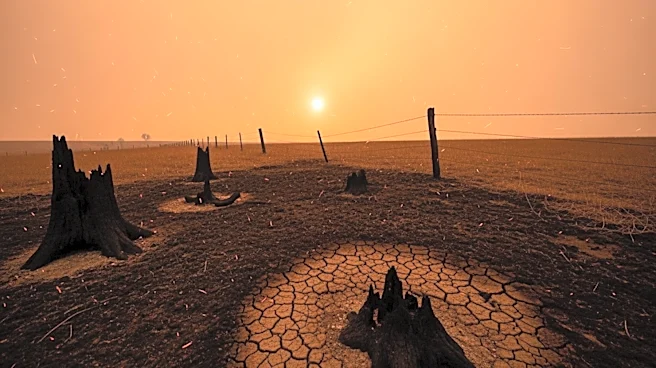
The American Great Plains, a key region for cattle ranching, has been severely affected by record-breaking wildfires fueled by extreme drought and rising temperatures. Nebraska, in particular, has seen
unprecedented fire activity, with the Morrill fire burning over 642,000 acres. These fires have resulted in significant losses, including the death of livestock and destruction of rangelands. The fires are exacerbated by dry conditions and strong winds, which have increased the frequency and intensity of wildfires in recent years. The devastation has left ranchers struggling to recover, with concerns about the long-term impact on grazing lands.
Why It's Important?
The wildfires pose a significant threat to the cattle industry, which is a major economic driver in the Great Plains. The destruction of grazing lands could lead to long-term challenges for ranchers, affecting cattle production and livelihoods. The fires also highlight the broader issue of climate change and its impact on land management practices. As temperatures rise and drought conditions persist, the risk of wildfires increases, necessitating changes in how these landscapes are managed. The situation underscores the need for sustainable practices to mitigate fire risks and support recovery efforts.
What's Next?
Ranchers are hoping for favorable summer rains to aid in the recovery of grazing lands. However, the unpredictability of weather patterns poses a challenge. There is a need for coordinated efforts to support affected communities, including donations of hay and other resources. Long-term, there may be opportunities to revise land management practices to better coexist with the reality of increased fire risks. This includes considering the role of natural fires in maintaining healthy grasslands and adapting ranching practices to changing environmental conditions.