






What's Happening?
Eight European cities have been announced as finalists for the European Commission’s annual European Green Capital and Green Leaf Awards. These awards recognize cities demonstrating measurable environmental progress and improving residents' quality of
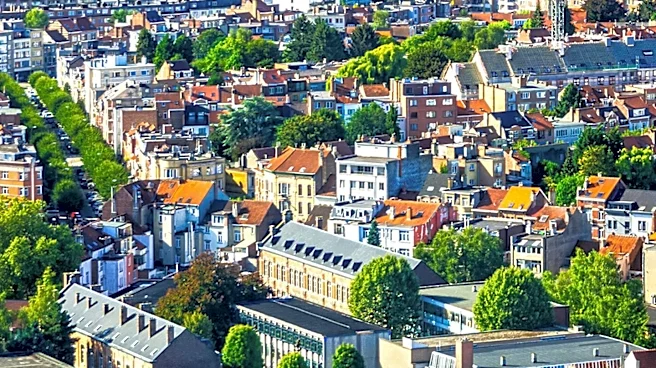
life. An independent panel narrowed down 27 applicants to these eight finalists, evaluating them on criteria such as air and water quality, biodiversity, emission reduction efforts, and waste management. The winners will be declared on October 8th in Guimarães, Portugal, the 2026 Green Capital. Five cities—Aalborg (Denmark), Bielsko-Biała (Poland), Košice (Slovakia), Porto (Portugal), and Zaragoza (Spain)—are vying for the Green Capital title, which is open to cities with over 100,000 inhabitants. The Green Leaf awards, for smaller cities with populations between 20,000 and 100,000, have three finalists: Benidorm (Spain), Chiclana de la Frontera (Spain), and Estarreja (Portugal). These awards aim to encourage and highlight urban areas that are actively working towards a more sustainable future.
Why It's Important?
This initiative is important as it incentivizes European cities to adopt and implement sustainable practices, directly impacting the quality of life for millions of urban residents. By recognizing and rewarding environmental achievements, the European Commission fosters a competitive environment that drives innovation in urban planning, pollution control, and climate change adaptation. The awards provide financial grants—€600,000 for the Green Capital and €200,000 for Green Leaf winners—which enable cities to further invest in environmental projects and public programs. This not only benefits the local populations through cleaner air and water, more green spaces, and better waste management, but also sets a precedent for other cities globally. The focus on preparing for threats like extreme heat and flooding underscores the growing urgency of climate change adaptation in urban environments, making these efforts crucial for long-term resilience and sustainability.
What's Next?
The eight finalist cities will present their environmental plans to an international jury on October 7th and 8th. Following these presentations, the winners of both the European Green Capital and Green Leaf Awards will be announced on October 8th in Guimarães, Portugal. The winning cities will then have over a year to prepare and implement their proposed projects, events, and public programs during their title year. This period will involve utilizing the awarded funds to advance their environmental goals, potentially leading to significant improvements in urban sustainability. The recognition and financial support are expected to catalyze further green initiatives and serve as models for other European cities striving to enhance their environmental performance and adapt to a changing climate.
Beyond the Headlines
Beyond the immediate recognition and financial incentives, these awards highlight a broader paradigm shift in urban development across Europe. Cities are increasingly re-evaluating their infrastructure and planning to integrate more green spaces, improve water management, and reduce emissions in response to hotter summers and unpredictable weather patterns. Examples like Barcelona closing streets to traffic, Milan incorporating vertical forests, and Breda transforming into a 'National Park City' demonstrate a growing commitment to making urban environments more livable and sustainable. This trend reflects a deeper understanding of the interconnectedness between urban health, environmental quality, and climate resilience. The awards not only celebrate current achievements but also encourage a long-term vision for urban areas that prioritizes ecological balance and the well-being of their inhabitants, fostering a cultural shift towards environmental stewardship.