


What's Happening?
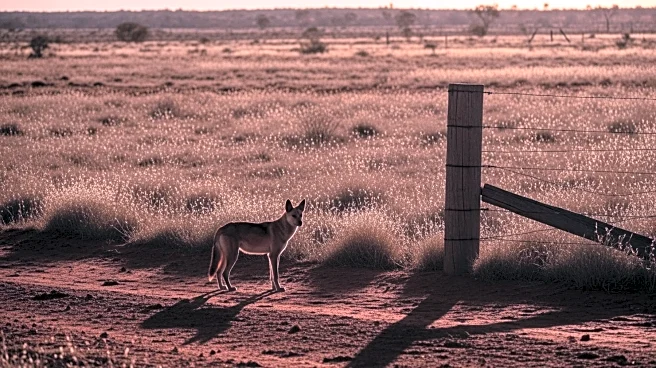
The Australian government has faced significant backlash after euthanizing a group of dingoes linked to the death of a Canadian backpacker, Piper James, on K'gari island. The Queensland government reported that six dingoes were put down following the discovery
of James' body on January 19. An autopsy revealed evidence of drowning and dingo bites, though the bites were not deemed the immediate cause of death. The decision to euthanize the dingoes has sparked debate over wildlife management practices, with criticism from the Butchulla people, the island's traditional owners, who were not consulted. Wildlife experts have also expressed concern that the culling could threaten the genetic diversity of the island's dingo population, estimated at 70-200 animals.
Why It's Important?
This incident highlights the ongoing tension between wildlife conservation and public safety in Australia. The decision to euthanize the dingoes has raised ethical questions about human intervention in natural ecosystems. The backlash from the Butchulla people underscores the importance of involving Indigenous communities in wildlife management decisions. The situation also reflects broader issues of how economic and tourism interests can conflict with conservation efforts. The potential impact on the dingo population's genetic diversity could have long-term ecological consequences, affecting the island's biodiversity and ecosystem balance.
What's Next?
The coroner's investigation into Piper James' death is ongoing and expected to take several weeks. The Queensland government plans to continue monitoring the remaining dingoes for aggressive behavior. There is a call for a collaborative approach involving wildlife managers, Indigenous groups, and tourism operators to develop strategies for coexistence between humans and dingoes on K'gari. This may include educational campaigns to discourage feeding dingoes and measures to ensure tourist safety while preserving the island's natural heritage.
Beyond the Headlines
The incident raises broader questions about human-wildlife interactions and the ethical considerations of wildlife management. The response to the dingo attacks may set a precedent for how similar situations are handled in the future, potentially influencing policies on wildlife conservation and tourism management. The cultural significance of dingoes to Indigenous communities adds another layer of complexity, highlighting the need for culturally sensitive approaches to environmental stewardship.