








What's Happening?
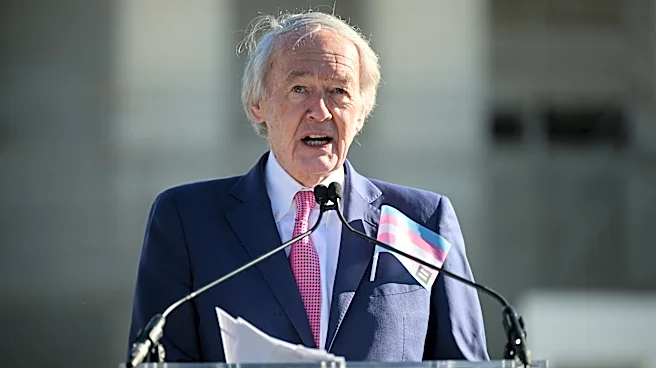
Senator Ed Markey, an 80-year-old Democrat, decisively won his primary election in Massachusetts, defeating his younger challenger, Representative Seth Moulton. The Associated Press called the race shortly after polls closed, with Markey leading by nearly
50 points. This victory marks a continuation of Markey's long tenure in Congress, which began during the presidency of Gerald Ford. Moulton, a 47-year-old Iraq War veteran, had campaigned on a platform of new generation leadership, attempting to position himself as a more moderate alternative to the progressive incumbent. However, Markey garnered significant support from prominent progressive figures like Senator Bernie Sanders and Representative Alexandria Ocasio-Cortez. The race highlighted a dynamic where Massachusetts Democrats prioritized Markey's established progressive record over Moulton's call for younger leadership, despite a broader national discussion within the Democratic Party about its aging leadership.
Why It's Important?
Senator Markey's victory in Massachusetts is significant as it pushes back against the narrative that the Democratic Party is uniformly seeking to replace its older guard with younger leaders. This outcome suggests that for some Democratic constituencies, a long-standing progressive record and alignment with key progressive figures can outweigh concerns about age. The result also underscores the continued influence of prominent progressive endorsements in primary elections. For the Democratic Party, this election indicates a complex internal dynamic where calls for generational change are balanced against the appeal of experienced, ideologically aligned incumbents. It also demonstrates that the issue of U.S. policy toward Israel, which has been a flashpoint in other Democratic primaries, did not significantly impact this race, as both candidates had criticized Benjamin Netanyahu's government and opposed new military aid to Israel.
What's Next?
Following his primary victory, Senator Markey will now focus on the general election in November. Given Massachusetts' strong Democratic lean, he is widely expected to secure re-election to the Senate. His continued presence in the Senate will likely reinforce the progressive wing of the Democratic Party, particularly on issues such as climate change, given his past championing of the Green New Deal. The outcome of this primary may also influence future discussions within the Democratic Party regarding leadership succession and the balance between experience and generational change. Other older progressive leaders, such as Senator Bernie Sanders and Senator Elizabeth Warren, may see this as an affirmation of their continued relevance and appeal to younger voters.
Beyond the Headlines
The Massachusetts primary result offers a deeper insight into the evolving identity of the Democratic Party. While there has been a national conversation about the party's 'gerontocracy' and the need for new leadership, Markey's win suggests that this sentiment is not universally applied, especially when an older candidate is perceived as a strong progressive voice. The election also highlights the nuanced role of ideology versus age in voter decision-making. Moulton's attempt to move left and appeal to progressives ultimately failed against Markey's established progressive credentials, indicating that authenticity in progressive politics can be more valued than a recent shift in stance. Furthermore, Moulton's past comments regarding transgender athletes, which he later partially apologized for, became a point of contention, demonstrating the sensitivity and importance of social issues within the progressive electorate.