






What's Happening?
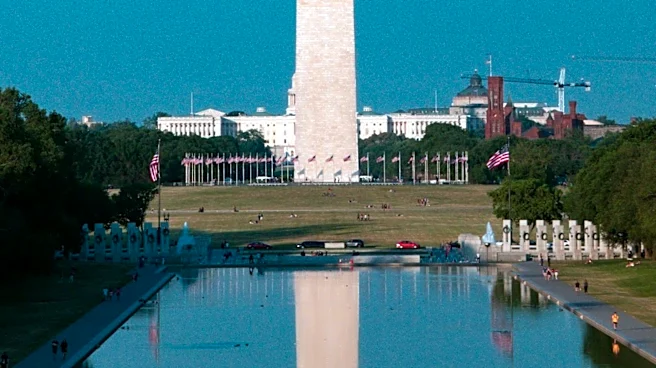
David Hearn, a former Olympic canoe racer, has pleaded not guilty to charges of deliberately damaging the Lincoln Memorial Reflecting Pool. The case has become politically charged, with critics of the Trump administration labeling it an abuse of prosecutorial
power. Hearn, who competed in three Summer Olympics, was indicted on a felony count of property destruction. The incident occurred after President Trump initiated a multi-million dollar renovation of the Reflecting Pool, which faced issues including damage to its new coating. Trump alleged, without evidence, that vandals were responsible for the damage. Hearn claims he merely examined the pool's sealant and released a piece when instructed by a park worker. He is accused of causing over $1,000 in damage. During his court appearance, Hearn was not required to be supervised while awaiting trial, and a status hearing is set for August 5.
Why It's Important?
The case highlights tensions between political narratives and legal proceedings. Critics argue that the charges against Hearn are politically motivated, serving as a distraction from the renovation project's issues. The prosecution's approach has raised concerns about the use of legal systems for political ends, potentially undermining public trust. The outcome of this case could influence public perception of the Trump administration's handling of public projects and its approach to law enforcement. Additionally, the case underscores the broader debate over the politicization of legal actions and the potential impact on civil liberties.
What's Next?
A status hearing for David Hearn is scheduled for August 5. The legal proceedings will likely continue to attract public and media attention, especially given the political implications. The defense is expected to challenge the prosecution's evidence and narrative, potentially leading to further scrutiny of the renovation project's management. The case may also prompt discussions about the role of political influence in legal matters, with potential reactions from civil rights groups and political commentators.