








What's Happening?
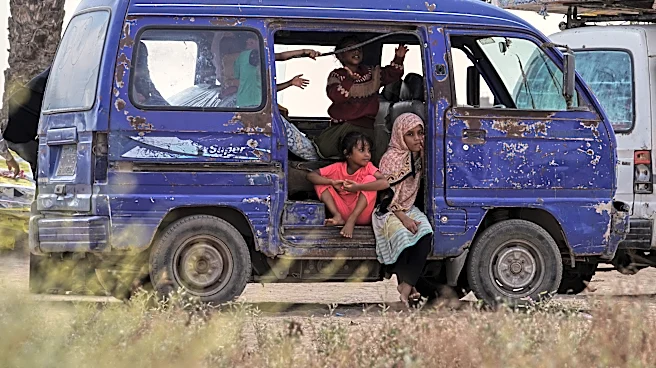
A new report by Oxfam, titled 'Rigged from Birth: How inequality steals futures in Asia and five public services that can reverse it,' highlights severe economic inequality across 19 Asian economies. The report indicates that the poorest half of the population
in these countries earns less than the richest 1.0 percent. This disparity is attributed to decades of 'growth at any cost,' privatization, and austerity measures that have led to underfunded public services. Specifically, Asian governments invest 9.4 percent of GDP in social protection, which is less than half the global average, and 2.9 percent in public education, falling below the international benchmark of 4-6 percent. The report also criticizes the reliance on regressive consumption taxes in several Asian countries, which disproportionately affect lower-income households. Countries facing significant debt, such as Pakistan, spend considerably more on debt servicing than on protecting their citizens, with Pakistan allocating nearly 43 percent of its recent budget to debt repayments. Despite a decline in inequality in Pakistan between 1990 and 2022, it remains above the World Bank’s threshold for high inequality.
Why It's Important?
This Oxfam report underscores a critical global issue: the widening gap between the rich and the poor, even in rapidly growing economies. For the U.S., this has several implications. Economically, severe inequality in major global markets like Asia can lead to instability, affecting international trade and investment opportunities for American businesses. Socially, such disparities can fuel unrest and migration, potentially impacting U.S. foreign policy and humanitarian aid efforts. The report's call for increased public spending on essential services like care, education, health, digital services, and social protection, along with fiscal justice, resonates with ongoing debates in the U.S. regarding wealth distribution, progressive taxation, and the role of government in providing social safety nets. The critique of regressive consumption taxes and the pressure from institutions like the IMF for austerity measures in developing nations also highlight a broader global economic framework that the U.S., as a leading economic power, influences and is influenced by. The findings suggest that a 'growth at any cost' model, if adopted or promoted globally, can have detrimental long-term societal consequences, challenging the sustainability of current economic paradigms.
What's Next?
The Oxfam report advocates for a shift towards a new economic model that prioritizes public services and fiscal justice. This would involve increased public spending on care, education, health, digital services, and social protection, alongside reforms to tax systems to make them more progressive. The report's findings are likely to fuel discussions among international organizations, governments, and civil society groups about sustainable development and equitable growth strategies. Developing nations, particularly those in Asia, may face renewed pressure to re-evaluate their fiscal policies and investment priorities. The International Monetary Fund (IMF), which has historically urged austerity in developing countries, might face scrutiny to consider the social impact of its recommendations. For the U.S., this report could inform its approach to international development aid, trade agreements, and diplomatic engagements with Asian nations, potentially leading to greater emphasis on inclusive growth and social equity in its foreign policy agenda. The ongoing debate about the balance between economic growth and social welfare is expected to intensify, with calls for more robust social protection systems and fairer tax structures.
Beyond the Headlines
The Oxfam report delves into the ethical and systemic implications of economic policies that prioritize growth over equitable distribution. The concept of 'Rigged from Birth' suggests that existing economic structures inherently disadvantage a significant portion of the population, perpetuating cycles of poverty and limiting access to fundamental services. This raises profound questions about the moral responsibility of governments and international financial institutions to ensure basic human rights and opportunities for all citizens. The report implicitly challenges the neoliberal economic model that has dominated global policy for decades, advocating for a more human-centric approach to development. The emphasis on fiscal justice and progressive taxation highlights a global movement towards re-evaluating how wealth is generated and distributed, and who bears the burden of economic development. This shift could lead to long-term changes in global economic governance, potentially fostering greater international cooperation on issues of social equity and sustainable development. The report also underscores the interconnectedness of global economies, where inequality in one region can have ripple effects worldwide, influencing everything from political stability to global supply chains.