



What's Happening?
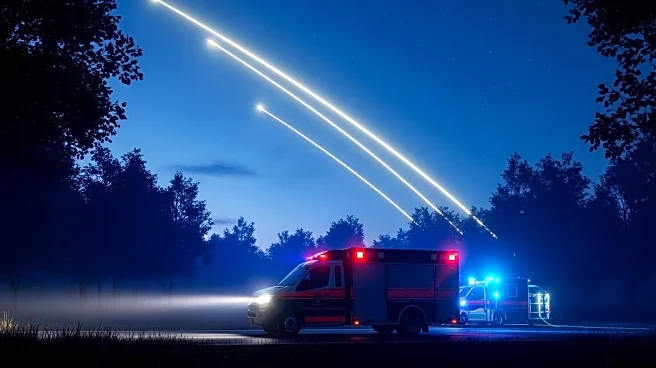
United Hatzalah led a large-scale emergency drill in Kochav Yaakov, simulating the aftermath of a ballistic missile strike on a school. The exercise involved hundreds of volunteers and security personnel, including the Israel Defense Forces, Israel Police,
and Israel Fire and Rescue Services. The drill aimed to prepare first responders for severe scenarios, such as a missile strike on a civilian institution during school hours. Participants dealt with simulated mass casualties, including injuries from blasts, burns, and psychological trauma. The exercise also included a scenario of coordinated terrorist infiltration, requiring emergency forces to manage multiple threats simultaneously.
Why It's Important?
This drill is crucial for enhancing Israel's preparedness for potential missile attacks, especially given the ongoing tensions with Iran. By simulating such scenarios, first responders can improve their response times and coordination, potentially saving lives in real situations. The exercise also underscores the importance of psychological first aid in managing trauma, highlighting the need for comprehensive emergency response strategies. As missile threats remain a significant concern for Israel, such drills are vital for national security and public safety.
What's Next?
Following the drill, United Hatzalah and participating agencies will likely conduct debriefings to assess performance and identify areas for improvement. These insights will inform future training and preparedness efforts. Additionally, the exercise may prompt further collaboration between emergency services and government agencies to enhance Israel's overall security infrastructure. Continued vigilance and readiness will be essential as geopolitical tensions persist.
Beyond the Headlines
The drill reflects broader regional security challenges and the need for robust defense strategies. It also highlights the role of volunteer organizations like United Hatzalah in national emergency preparedness. The integration of psychological support in emergency response may influence future protocols, emphasizing the importance of mental health in crisis situations.