






What's Happening?
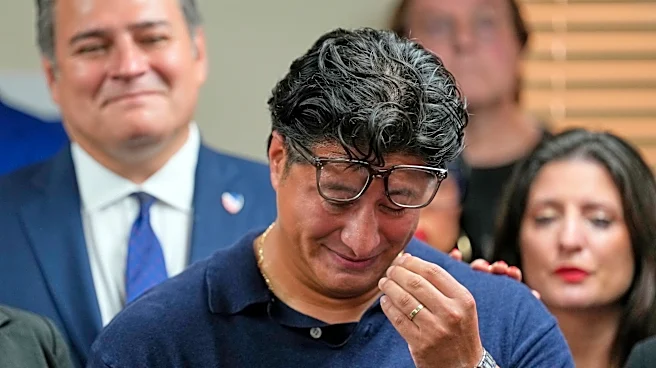
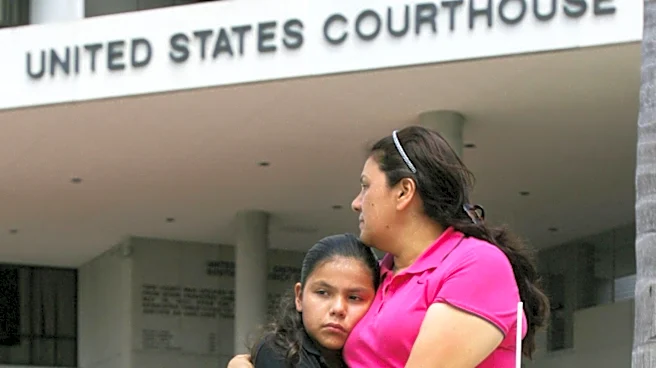
Yessenia Ruano, a teacher's aide at ALBA Elementary in Milwaukee, has returned to the United States after self-deporting to El Salvador over a year ago. Ruano initially came to the U.S. in 2011 and applied for a 'T Visa,' which is designed for victims
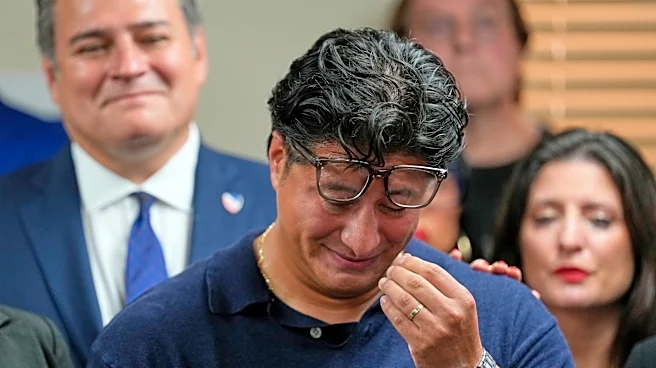
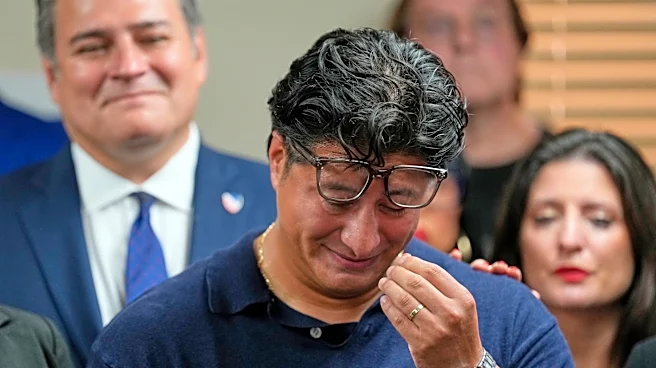
of trafficking. However, a policy shift under the Trump Administration allowed Immigration and Customs Enforcement (ICE) to proceed with deportations during the visa review process. To avoid forced removal, Ruano chose to self-deport in June 2025, taking her two U.S.-citizen daughters with her. Her return to Milwaukee was met with support from colleagues and community members at the Voces de la Frontera office, who had been advocating for her return.
Why It's Important?
Ruano's case highlights the impact of immigration policy changes on individuals and families. The policy shift that allowed ICE to deport individuals during the visa review process has significant implications for those seeking protection under specific visa categories, such as the 'T Visa.' This situation underscores the challenges faced by immigrants who are navigating complex legal and bureaucratic systems while trying to secure their status in the U.S. The return of Ruano also emphasizes the role of community support and advocacy in addressing immigration issues, as her colleagues and local organizations played a crucial part in her journey back to Milwaukee.
What's Next?
Ruano will continue to wait for her 'T Visa' to be processed while residing in the United States. Her case may draw attention to the need for policy reviews and potential reforms in how immigration cases are handled, particularly those involving vulnerable individuals. Advocacy groups and legal experts may push for changes to ensure that applicants are not deported while their cases are under review, which could lead to broader discussions on immigration policy at both local and national levels.