



What's Happening?
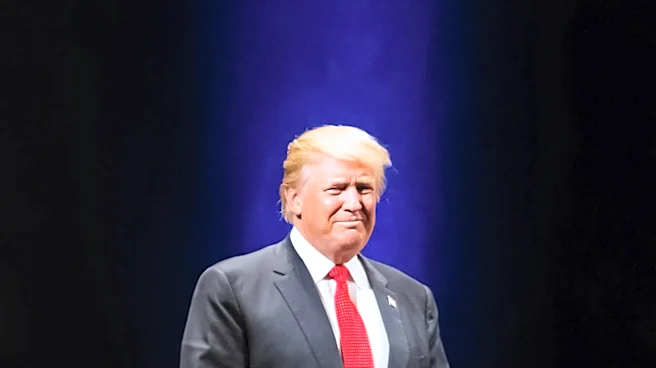
S.E. Cupp, a CNN commentator, has publicly stated her belief that President Trump's ongoing 'war against the press' will ultimately be unsuccessful. Cupp argues that despite President Trump's continuous attacks, which she acknowledges have had a chilling
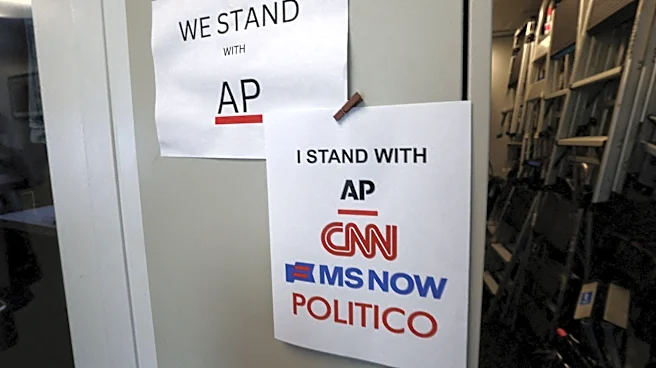
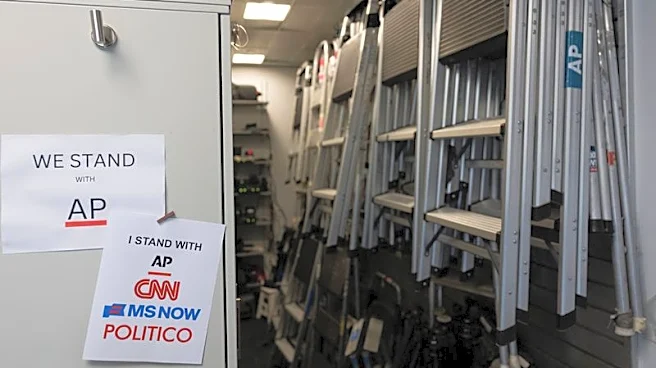
effect, the press will prevail. She contrasts the American system, where a free press is protected and expected to hold political leaders accountable, with countries like Russia or North Korea, where state media is controlled. Cupp suggests that President Trump's actions, including banning news outlets like MS NOW, Politico, and CNN from covering the White House, stem from his declining approval ratings and a perceived need to deflect from his administration's performance. She points out that these bans coincide with President Trump's approval numbers falling below 30% in some polls. Cupp criticizes President Trump for focusing on issues she deems less critical, such as 'ballrooms and buildings' and 'chasing crypto deals,' while the nation is involved in a war and Americans face high costs of living. She contends that his attempts to punish or sideline the press are a disingenuous effort to avoid accountability for his decisions and their impact on voters.
Why It's Important?
This commentary highlights a significant ongoing tension between the U.S. presidency and the media, a dynamic crucial to the functioning of American democracy. The assertion that the press will ultimately 'win' against presidential attacks underscores the constitutional protections afforded to a free press and its role as a check on power. If the press is perceived as being under attack, it can erode public trust in both institutions, potentially leading to a more polarized information landscape. The implications extend to how information is disseminated and consumed by the public, influencing voter perceptions and political discourse. The banning of specific news outlets from White House coverage raises concerns about transparency and access to information, potentially limiting the public's understanding of government actions. This situation could also set a precedent for future administrations regarding their interactions with the media, impacting the long-term health of journalistic independence and government accountability in the U.S.
What's Next?
The ongoing conflict between President Trump and certain media outlets is likely to continue, especially as the 2026 midterm elections approach. President Trump may continue to use social media and other platforms to criticize news organizations he perceives as hostile, and further restrictions on press access could be implemented. Conversely, media organizations are expected to continue their reporting, potentially increasing their focus on government transparency and accountability. This dynamic could lead to more legal challenges regarding press access and freedom, as well as increased public debate about the role and responsibilities of both the presidency and the media. The public's perception of these interactions will be a key factor, potentially influencing voter behavior and the broader political landscape. The situation may also prompt discussions within journalistic circles about strategies to maintain independence and credibility amidst political pressure.
Beyond the Headlines
Beyond the immediate political skirmish, this situation touches upon fundamental principles of American governance and the role of the Fourth Estate. The concept of a 'free press' is not merely about reporting facts but also about providing diverse perspectives and holding power accountable, which is essential for a healthy democracy. President Trump's characterization of critical reporting as 'fiction and lies' and his decision to ban outlets raise ethical questions about the weaponization of information and the erosion of trust in established institutions. This could lead to a more fragmented media environment where citizens increasingly rely on sources that confirm their existing biases, further deepening societal divisions. The long-term implications could include a re-evaluation of journalistic ethics, the legal boundaries of press freedom, and the public's role in discerning truth in an increasingly complex information ecosystem. The outcome of this 'war' could redefine the relationship between the U.S. presidency and the press for future generations.