



What's Happening?
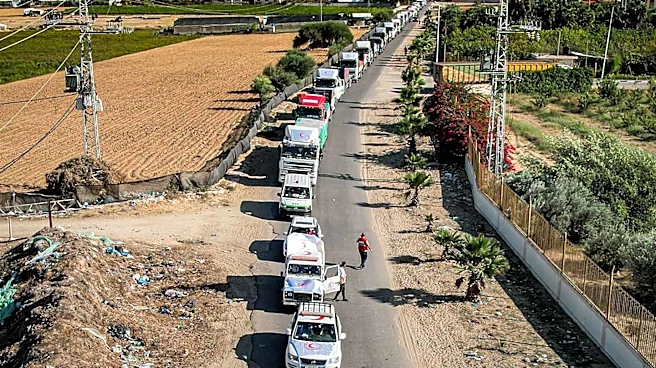
The Somali Disaster Management Agency (SoDMA) has distributed essential non-food items to displaced and vulnerable families in Beledweyne, Somalia. These supplies, including tarpaulins and mosquito nets, are intended to help residents cope with significant
flood risks caused by El Niño-related rains, which have affected over 175,000 people across Somalia. The distribution was overseen by Beledweyne District Commissioner Omar Alasow and SoDMA officials. This humanitarian intervention occurs concurrently with an escalating political crisis in Beledweyne, marked by armed mobilization and the displacement of the regional governor. The city is at the center of a political confrontation following a disputed Hirshabelle presidential election, with reports of federal troops defecting and a former intelligence director returning with an armed convoy supporting a breakaway administration. While the aid addresses immediate humanitarian needs, it does not resolve the underlying political instability.
Why It's Important?
The convergence of a severe humanitarian crisis and political instability in Beledweyne highlights the complex challenges faced by fragile states. For international aid organizations and donor countries, this situation underscores the difficulties of delivering assistance effectively in environments where governance is contested and security is precarious. The aid distribution, while crucial, operates on a separate track from political dialogue, indicating a fragmented response to a multifaceted crisis. This scenario can lead to aid being diverted or its impact diminished by ongoing conflict, raising questions about the sustainability and efficacy of humanitarian efforts without parallel political stabilization. The U.S. and other international actors often provide significant humanitarian aid, and such situations necessitate careful consideration of how to ensure aid reaches its intended beneficiaries amidst political turmoil.
What's Next?
The immediate focus will remain on addressing the humanitarian needs of those affected by the floods in Beledweyne, with SoDMA and other agencies likely continuing their relief efforts. However, the political crisis demands a separate resolution. The federal government has sent mediators to Beledweyne, indicating an attempt to calm the situation, but the effectiveness of these efforts remains to be seen. The coexistence of humanitarian aid and political confrontation will continue to be a critical challenge. Future developments will depend on the success of political mediation, the ability of local authorities to assert control, and the sustained provision of humanitarian assistance. The long-term stability of Beledweyne and similar regions in Somalia will require integrated strategies that address both environmental vulnerabilities and political grievances.
Beyond the Headlines
This situation reveals the profound interconnectedness of environmental disasters, political governance, and human security. The El Niño-induced floods are not merely natural phenomena but are exacerbated by underlying vulnerabilities, including weak infrastructure and limited governmental capacity to respond. The political crisis, in turn, complicates humanitarian access and resource allocation, potentially deepening the suffering of the population. This raises deeper questions about the role of external actors in supporting governance and disaster preparedness in fragile contexts. The ethical implications include ensuring that humanitarian aid remains neutral and impartial, avoiding its instrumentalization in political conflicts, and advocating for long-term solutions that build resilience against both environmental shocks and political instability. The incident also highlights the need for robust local governance structures that can effectively manage crises, independent of broader political disputes.