
What's Happening?
A recent study led by Erasmus MC in the Netherlands and the University of California, Davis, has confirmed the first mass die-off of skuas in Antarctica due to the H5N1 avian influenza virus. The study,
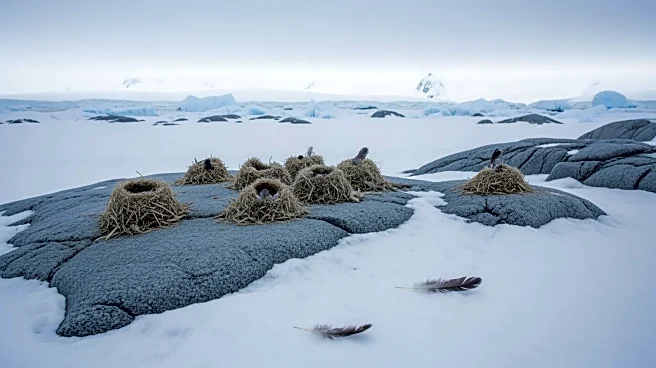
published in the Scientific Reports journal, documented the deaths of over 50 skuas during the 2023 and 2024 summers. Skuas, which are relatives of gulls, play a crucial role in the Antarctic ecosystem as scavengers. The research team conducted an expedition to the South Shetland Islands, the northern Weddell Sea, and the Antarctic Peninsula, where they tested wildlife samples and confirmed the presence of H5N1 at all sites. This study marks the first time the virus has been confirmed as the cause of death for animals in Antarctica, although it had been detected there previously.
Why It's Important?
The spread of H5N1 avian flu to Antarctica is significant as it highlights the virus's global reach and adaptability. Initially identified in 1996 on a Chinese goose farm, H5N1 has since spread worldwide, affecting both wildlife and domestic animals. In the U.S., the virus has impacted mega-farms, posing risks to both human and animal health. The adaptability of the virus raises concerns about its potential to infect other species, including humans and cattle. The die-off of skuas in Antarctica could have broader ecological implications, potentially affecting other species such as penguins. The study underscores the need for enhanced global surveillance and preventive measures to monitor and control the spread of avian flu.
What's Next?
Researchers are calling for increased global surveillance and preventive measures to better track the spread of avian flu in Antarctica and beyond. The study's authors emphasize the importance of monitoring the virus's spread to prevent further ecological and health impacts. There is a particular concern about the potential for the virus to infect other species in Antarctica, such as penguins, which could have devastating effects on the region's already threatened wildlife. The study highlights the need for international cooperation and vigilance to address the ongoing threat posed by H5N1.