



What's Happening?
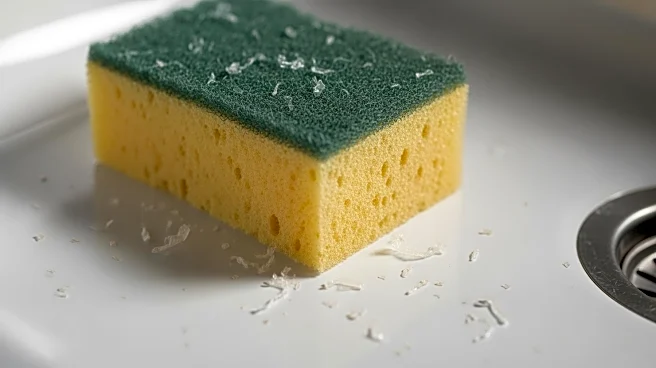
A recent study published in Environmental Advances has identified kitchen sponges as a significant, yet under-researched, source of microplastic pollution in households. The research aimed to quantify the release of microplastic particles from sponges during
typical use and assess their environmental impact. Conducted through a combination of citizen science and laboratory tests, the study involved volunteer households in Germany and North America using different types of sponges. The sponges were weighed before and after use to measure material loss and microplastic release. Results showed that all sponges release microplastics, with annual emissions ranging from 0.68 to 4.21 grams per person, depending on the sponge type. Sponges with lower plastic content were found to release fewer microplastics. Despite the microplastic release, the study highlighted that water consumption during dishwashing contributes more significantly to environmental impact.
Why It's Important?
The findings of this study underscore the broader environmental implications of everyday household items, such as kitchen sponges, which are often overlooked as sources of pollution. The release of microplastics into the environment poses a threat to aquatic ecosystems and potentially human health, as these particles can enter water bodies and soil. The study's emphasis on water consumption also highlights the need for more sustainable dishwashing practices. By identifying the environmental impact of common household items, the research encourages consumers to make informed choices, such as selecting sponges with lower plastic content and reducing water usage, to mitigate their ecological footprint.
What's Next?
The study suggests several strategies to reduce the environmental impact of dishwashing, including using less water, choosing sponges with lower plastic content, and extending the lifespan of sponges. These recommendations could influence consumer behavior and potentially lead to changes in manufacturing practices. Additionally, the study may prompt further research into other household items that contribute to microplastic pollution, encouraging a broader examination of consumer products and their environmental effects.