








What's Happening?
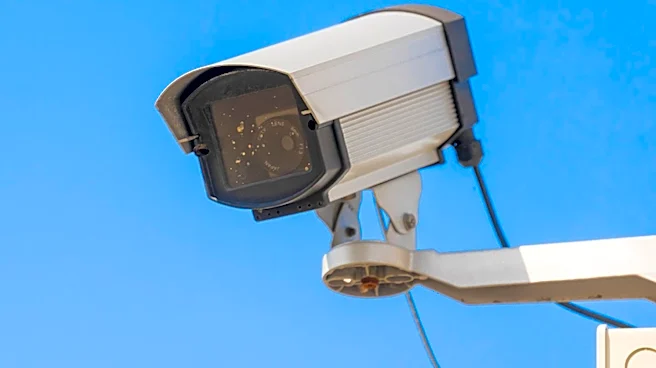
Automated license plate readers (ALPRs), manufactured by companies like Flock Safety and Motorola Solutions, are becoming increasingly prevalent across western Massachusetts. These devices capture images of vehicles, storing data such as license plates
and distinguishing features using AI algorithms. Police departments describe them as a powerful crime-fighting tool, enabling nationwide searches for vehicle locations. However, privacy advocates, public officials, and citizens are raising significant concerns, particularly regarding Flock Safety's system, which the American Civil Liberties Union (ACLU) has labeled a 'dangerous nationwide mass-surveillance infrastructure.' The Shoestring obtained data revealing that police departments from across the country, including those assisting Immigration and Customs Enforcement (ICE), have searched ALPR data from Holyoke, Massachusetts. Easthampton, another Massachusetts municipality, previously had its ALPR data searched for immigration-related reasons, but its police chief, Chad Alexander, later restricted out-of-state sharing. Easthampton subsequently ended its contract with Flock Safety due to budget cuts. Agawam City Councilor Christine Rickmon has also voiced concerns about the technology's digital security, potential misuse by police, and the lack of public consent in its installation.
Why It's Important?
The widespread deployment of ALPRs in Massachusetts and across the U.S. raises critical questions about privacy, civil liberties, and the scope of law enforcement surveillance. The ability of police departments nationwide to access and share ALPR data, including for immigration enforcement, creates a de facto national surveillance network that could impact individuals regardless of their location or alleged activities. The use of civil asset forfeiture funds by police to purchase these devices bypasses traditional budgetary oversight, limiting public debate and accountability. Concerns about potential misuse, such as officers using ALPRs for unauthorized personal reasons, as highlighted by a Washington Post investigation, underscore the need for robust oversight and regulation. The lack of comprehensive state legislation in Massachusetts, in contrast to neighboring states like Maine and New Hampshire, leaves residents vulnerable to unchecked data collection and retention practices. This technological expansion could erode public trust in law enforcement and governmental institutions if not managed with transparency and clear ethical guidelines.
What's Next?
State Representative Lindsey Sabadosa, D-Northampton, and Representative Steven Owens, D-Watertown, have filed a bill in Massachusetts to regulate ALPR use. This proposed legislation aims to limit the reasons police can use the technology, restrict data storage duration, and control access to data collected by other entities without a warrant. It would also prohibit the sale or purchase of ALPR data and its disclosure unless legally mandated. The bill is currently with the House Ways and Means Committee, with no reported progress since March. Local efforts, such as Boston's 2021 oversight ordinance requiring annual surveillance reports from police, may serve as models for other municipalities. The ACLU continues to advocate for stronger regulations, viewing Flock's recent policy reforms as 'cosmetic fixes.' The ongoing debate will likely involve continued legislative pushes, community activism, and potential legal challenges regarding the constitutionality and privacy implications of ALPR technology.
Beyond the Headlines
The proliferation of ALPRs touches upon deeper societal implications concerning the balance between public safety and individual privacy in an increasingly digitized world. The technology's capacity to track the totality of a person's movements, as argued by the ACLU of Massachusetts, could fundamentally alter the expectation of privacy in public spaces. The use of ALPRs for purposes beyond initial crime-fighting intentions, such as assisting ICE or potentially targeting individuals seeking reproductive healthcare, highlights the ethical dilemmas inherent in powerful surveillance tools. The lack of public discourse and consent in the acquisition and deployment of these systems, particularly when funded through civil asset forfeiture, undermines democratic principles and community trust. This trend reflects a broader shift towards predictive policing and data-driven law enforcement, which, without adequate safeguards, risks creating a surveillance state where citizens are constantly monitored, potentially leading to chilling effects on civil liberties and disproportionate impacts on marginalized communities.