
What's Happening?
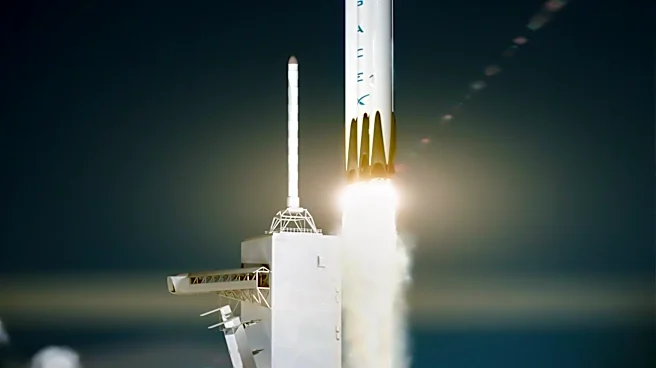
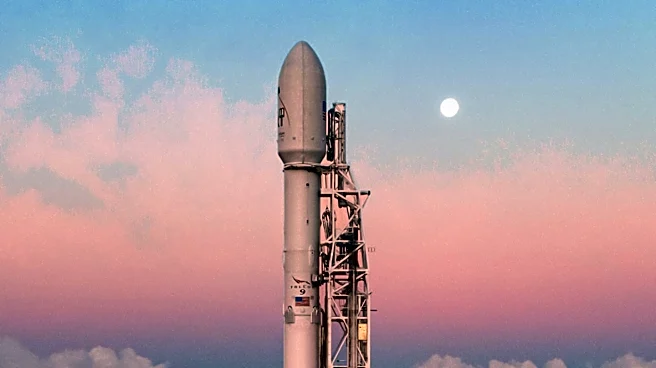
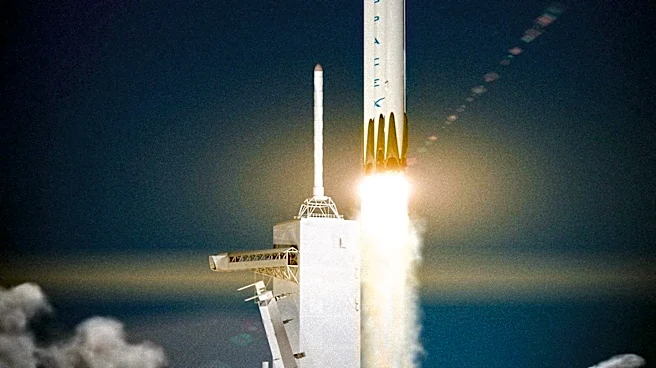
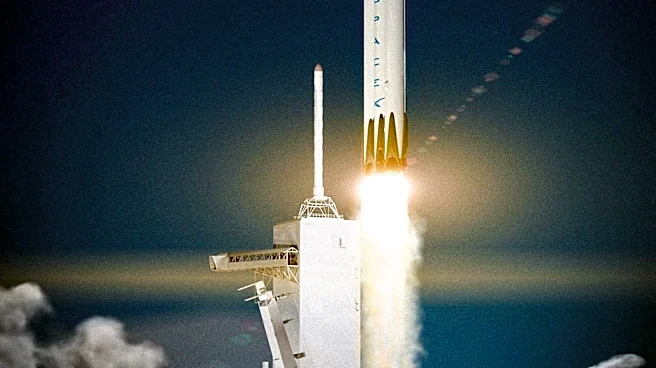
A spent SpaceX Falcon 9 upper stage is set to impact the Moon near Einstein Crater, traveling at approximately 8,700 kilometers per hour. This event provides astronomers with a unique opportunity to observe
a known piece of space debris hitting another celestial body. The rocket, launched in January 2025, carried two private Moon landers and has since been on a trajectory influenced by Earth, the Moon, and the Sun. The impact is expected to create a crater about 27 meters wide and 5 meters deep, with orbiters like NASA's Lunar Reconnaissance Orbiter set to capture before-and-after images.
Why It's Important?
The impending impact underscores the growing issue of space debris as more missions are planned to the Moon. As lunar exploration increases, managing and tracking space debris becomes crucial to ensure the safety of future missions and infrastructure. The event also provides valuable data for scientists to refine their models of impact events and understand the potential hazards posed by space debris. This incident highlights the need for international cooperation in space traffic management and debris mitigation strategies to protect both current and future lunar activities.
What's Next?
Following the impact, scientists will analyze data from orbiters to study the effects of the collision. This information could inform future strategies for managing space debris around the Moon. As lunar exploration intensifies, there may be increased efforts to develop policies and technologies to mitigate the risks associated with space debris. The event also serves as a reminder of the importance of sustainable practices in space exploration, prompting discussions on how to balance exploration with environmental stewardship of celestial bodies.