






What's Happening?
The European Union is preparing to impose new sanctions that will include the Songdowon International Children’s Camp in North Korea. This camp is identified in an EU document, seen by RFE/RL, as participating in organized programs for transferring Ukrainian
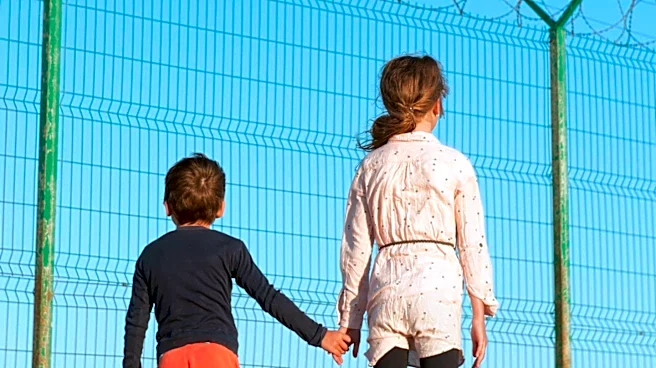
children from temporarily occupied territories to North Korea. The document states that these transfers, coordinated by Russian officials, serve a propagandistic function by exposing Ukrainian children to pro-Russian narratives. The camp is accused of direct involvement in the unlawful transfer, ideological indoctrination, and militarization of Ukrainian children in coordination with the Russian Federation. This development highlights North Korea's increasing involvement in the conflict, extending beyond military support to include participation in Russia's alleged program of abducting Ukrainian children. The camp, located on North Korea's east coast, was previously sanctioned by the United Kingdom for similar reasons, leading to North Korea recalling its ambassador to London.
Why It's Important?
This action by the EU underscores the international community's growing concern over the alleged forced deportation and re-education of Ukrainian children, an issue for which the International Criminal Court has already issued an arrest warrant for Russian President Vladimir Putin. Sanctioning a North Korean entity for its role in this program signifies a broader diplomatic and economic pressure campaign against both Russia and North Korea. It highlights the deepening alliance between Moscow and Pyongyang, which now extends to highly sensitive humanitarian issues. The involvement of North Korea in such activities could further isolate the regime and complicate international efforts to address human rights concerns. For Ukraine, these sanctions represent a continued effort by allies to hold perpetrators accountable and to shed light on the plight of abducted children, aiming to preserve Ukrainian identity among future generations.
What's Next?
The new EU sanctions are expected to be approved next week, officially adding the Songdowon International Children’s Camp and other entities to the list. This will likely trigger further diplomatic fallout, potentially leading to retaliatory measures or condemnations from North Korea and Russia. The international community will be watching to see if these sanctions lead to any changes in the operations of the camp or the broader program of transferring Ukrainian children. There may also be increased scrutiny on other similar 'summer camps' in Russia or Russian-occupied Ukrainian territories, which the EU document also notes are used for ideological indoctrination. The ongoing legal proceedings at the International Criminal Court regarding the unlawful deportation of Ukrainian children may also gain further evidence and momentum from these revelations.
Beyond the Headlines
The involvement of a North Korean children's camp in the alleged abduction and re-education of Ukrainian children raises profound ethical and legal questions. It suggests a systematic effort to erase Ukrainian identity and culture, which could be considered a form of cultural genocide. The use of 'cultural exchange' as a cover for such activities highlights the manipulative tactics employed in modern conflicts. This situation also underscores the vulnerability of children in war zones and the long-term psychological and social impacts of forced displacement and indoctrination. The collaboration between Russia and North Korea on this issue could set a dangerous precedent, normalizing the involvement of third-party states in such sensitive humanitarian violations. It also further complicates the geopolitical landscape, intertwining the Ukrainian conflict with broader concerns about human rights and international law violations by authoritarian regimes.