





What's Happening?
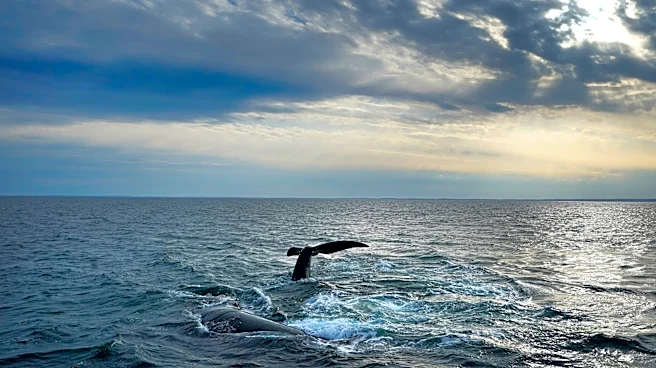
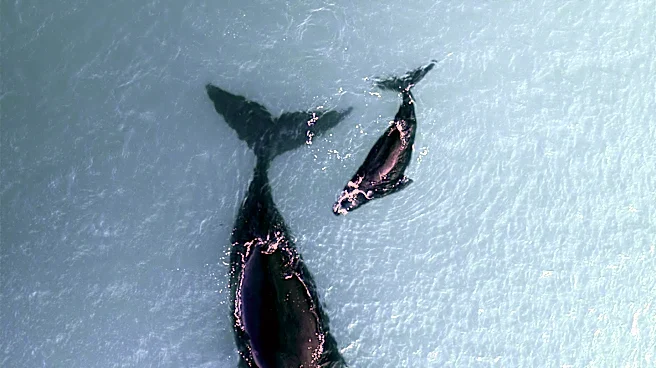
The population of the critically endangered North Atlantic right whale continues to decline, with scientists from the New England Aquarium reporting approximately 382 animals in 2025. This represents a roughly 2% decrease from the previous year, even
after accounting for new data revisions. Heather Pettis, chair of the North Atlantic Right Whale Consortium, stated that the population is not yet on a clear path to recovery. The primary causes for this ongoing decline are human-caused injuries, specifically from entanglement in fishing gear and collisions with ships. Phillip Hamilton of the New England Aquarium emphasized the severe pain and suffering these whales endure from such injuries, likening entanglement to being wrapped in rope that saws into their bodies.
Why It's Important?
The continued decline of the North Atlantic right whale population is a critical environmental and conservation issue for the U.S. and Canada. As one of the most imperiled whale species, its dwindling numbers signal a broader ecological imbalance in the Atlantic Ocean. The primary threats—fishing gear entanglement and ship strikes—highlight the direct impact of human activities on marine wildlife. This situation puts pressure on regulatory bodies and industries, particularly fishing and shipping, to implement more effective mitigation strategies. The loss of this species would represent a significant blow to marine biodiversity and the health of ocean ecosystems, potentially affecting the food web and overall ocean resilience. It also underscores the economic and social challenges of balancing human maritime activities with species protection.
What's Next?
Conservation efforts will likely intensify, focusing on stricter regulations and innovative solutions to reduce human-caused injuries. This could include mandates for modified fishing gear to prevent entanglement, such as ropeless fishing technology, and enhanced vessel speed restrictions in critical whale habitats. Increased monitoring and enforcement of existing regulations will also be crucial. Scientists and conservation groups will continue to track the population, analyze injury patterns, and advocate for policy changes. Public awareness campaigns may also be launched to educate maritime industries and the general public about the plight of these whales and the importance of their protection. International cooperation between the U.S. and Canada will be essential, given the whales' migratory patterns across both nations' waters.
Beyond the Headlines
The struggle to save the North Atlantic right whale reflects a larger global challenge of marine conservation in an increasingly industrialized ocean. It raises ethical questions about humanity's responsibility to protect endangered species and the long-term consequences of unchecked industrial expansion. The economic implications of conservation measures, such as costs associated with new fishing technologies or shipping route adjustments, often lead to complex debates among stakeholders. This situation also highlights the scientific community's role in providing data and solutions, and the need for effective communication to translate scientific findings into actionable policy. Ultimately, the fate of the North Atlantic right whale serves as a barometer for the health of our oceans and our commitment to sustainable coexistence with marine life.