






What's Happening?
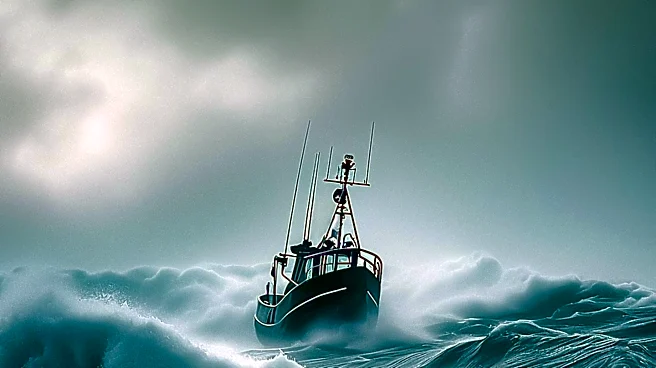
A 15-year-old boy was rescued by a fishing vessel in Alaska's Bering Sea after clinging to a capsized skiff for nearly three days in frigid waters. The U.S. Coast Guard reported that the boy's brother and cousin, who were with him, died after the small
boat overturned. The rescue occurred near St. Lawrence Island, an Alaskan island geographically closer to Russia than to the continental United States. The fishing boat, The Northwest Explorer, located the boy after a Coast Guard air crew spotted him Monday morning and deployed a raft and supplies. The boy was found kneeling atop the overturned skiff, experiencing symptoms of hypothermia. The crew of The Northwest Explorer warmed him with blankets and hot packs. The group had departed St. Lawrence Island on Friday and was expected to return by early Sunday, prompting a search by Coast Guard planes and helicopters after family members reported them missing.
Why It's Important?
This harrowing rescue highlights the extreme dangers of maritime travel in the remote and harsh conditions of the Bering Sea, particularly for small vessels. The incident underscores the critical role of the U.S. Coast Guard and civilian fishing vessels in search and rescue operations in vast and challenging environments. The survival of the 15-year-old, despite the loss of his companions and prolonged exposure to hypothermia-inducing temperatures, is a testament to human resilience and the effectiveness of coordinated rescue efforts. It also brings attention to the unique challenges faced by communities in remote Alaskan regions, where reliance on small boats for transportation and sustenance is common, and the consequences of maritime accidents can be severe due to isolation and extreme weather.
What's Next?
The rescued teenager is recovering from hypothermia, and authorities have not released the names of those involved. The U.S. Coast Guard will likely conduct an investigation into the circumstances surrounding the capsizing of the skiff and the deaths of the two individuals. This investigation could lead to recommendations for improved safety protocols, equipment requirements, or public awareness campaigns for those navigating the Bering Sea. The incident may also prompt discussions within local communities and among maritime safety organizations about enhancing preparedness and response capabilities for similar emergencies in remote Alaskan waters, potentially including better communication systems or more accessible rescue resources.
Beyond the Headlines
Beyond the immediate tragedy and rescue, this event sheds light on the broader socio-economic context of life in remote Alaskan communities. St. Lawrence Island, being closer to Russia, exemplifies the unique geographical and cultural landscape of the region. The reliance on small boats for travel, hunting, and fishing is integral to the lifestyle and subsistence of these communities, yet it carries inherent risks. The incident serves as a stark reminder of the unforgiving nature of the Arctic environment and the constant vigilance required for survival. It also implicitly raises questions about the adequacy of infrastructure and support systems for remote populations in the face of environmental hazards, and the profound impact of such losses on close-knit communities.