
What's Happening?
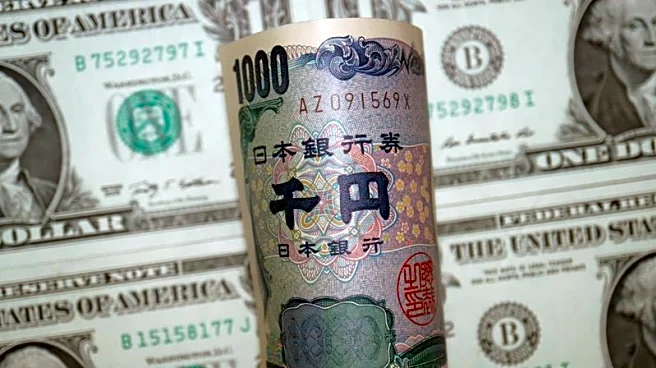
The Japanese yen has experienced significant pressure, trading near record lows against the euro and Swiss franc, as well as an 11-month low against the U.S. dollar. This development follows the Bank of
Japan's (BOJ) recent decision to raise interest rates by a quarter of a point to 0.75%, a three-decade high. Despite this increase, the cautious tone of BOJ Governor Kazuo Ueda has encouraged traders to sell the yen. Japanese officials, including top currency diplomat Atsushi Mimura and chief government spokesperson Minoru Kihara, have expressed concerns over the 'one-sided and sharp' currency movements and have hinted at potential intervention. The yen's weakness is partly attributed to concerns over new Prime Minister Sanae Takaichi's spending plans, which could further strain Japan's finances.
Why It's Important?
The yen's depreciation has significant implications for Japan's economy and its global trade relationships. A weaker yen can make Japanese exports more competitive, potentially boosting the country's export-driven economy. However, it also increases the cost of imports, which can lead to higher inflation and affect consumer purchasing power. The situation is further complicated by Japan's fiscal policies and the potential impact of Prime Minister Takaichi's spending plans. If the government fails to address fiscal policy risks, it could lead to increased selling of Japanese government bonds, further destabilizing the yen. This scenario poses challenges for Japan's economic stability and could influence global financial markets, particularly if intervention measures are deemed necessary.
What's Next?
BOJ Governor Kazuo Ueda is scheduled to speak at Japan's Keidanren business lobby on Christmas Day, which may provide further insights into the central bank's policy direction. Market participants will be closely monitoring any signals regarding potential interventions or adjustments in fiscal policy. The Japanese government faces the challenge of balancing economic growth initiatives with fiscal responsibility to prevent further currency destabilization. The outcome of these developments will be critical in determining the yen's trajectory and its impact on Japan's economic landscape.