
What's Happening?
A trade delegation from Kandahar province recently met with officials from the Iran-Afghanistan Joint Chamber of Commerce to discuss enhancing bilateral trade, resolving transit issues, and fostering joint
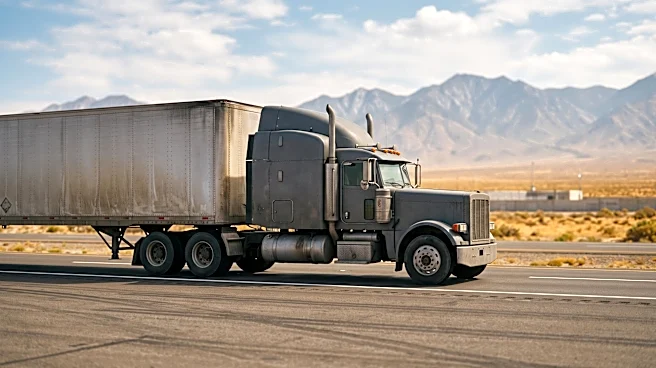
investment. The delegation was led by Kamaluddin Tawhid, head of the Afghanistan-Iran Joint Chamber of Commerce. Key topics included streamlining trade processes, removing transit barriers, addressing visa problems for truck drivers, and facilitating the movement of Afghan freight vehicles through Iran. The discussions also focused on providing better facilities at ports and border crossings and tackling challenges related to foreign currency obligations. Kamaluddin Tawhid highlighted the investment opportunities and economic potential within Kandahar and other sectors of Afghanistan's economy, aiming to attract Iranian traders and investors. Both sides emphasized the importance of follow-up actions, strengthening coordination between their economic institutions, and collaboratively working to eliminate trade obstacles to expand economic exchanges and investment ties.
Why It's Important?
This initiative is important for several reasons. For Afghanistan, particularly Kandahar, it represents a crucial step towards economic revitalization and integration into regional trade networks. By attracting Iranian investment and facilitating trade, Afghanistan can potentially boost its economy, create jobs, and reduce its reliance on foreign aid. For Iran, expanding trade and investment with Afghanistan could open new markets for its goods and services, strengthen its regional influence, and secure access to Afghan resources. The resolution of transit obstacles and visa issues for truck drivers is vital for improving the efficiency of cross-border trade, which benefits businesses and consumers in both countries. Furthermore, increased economic cooperation could contribute to regional stability by fostering interdependence and shared economic interests, potentially mitigating political tensions.
What's Next?
The next steps involve both sides following up on the discussed issues and strengthening coordination between their respective economic institutions. This will likely include concrete actions to implement the proposed facilities at border crossings, streamline customs procedures, and address the foreign currency and visa challenges. Further meetings and negotiations are expected to finalize agreements on joint investment projects and trade facilitation measures. The Afghanistan-Iran Joint Chamber of Commerce will play a pivotal role in monitoring progress and ensuring that the commitments made are translated into tangible results. The success of these efforts will depend on sustained political will and practical cooperation from both governments and private sector stakeholders.
Beyond the Headlines
Beyond the immediate economic benefits, this cooperation could have broader implications for regional dynamics. Enhanced trade and investment ties between Afghanistan and Iran could serve as a model for other neighboring countries, potentially leading to a more interconnected and economically robust Central and South Asian region. It also highlights Afghanistan's efforts to diversify its economic partnerships and reduce its isolation, which has been exacerbated by recent political changes. The focus on attracting foreign investment, particularly from a regional power like Iran, underscores a strategic shift towards self-reliance and regional economic integration. This could also subtly influence geopolitical alignments, as economic partnerships often pave the way for deeper diplomatic and strategic cooperation.